Health
Health Care’s AI Revolution Raises Critical Questions About Patient Safety

Clear Facts
- Artificial intelligence systems are rapidly being integrated into health care diagnostics, treatment planning, and patient monitoring across American hospitals and clinics
- Medical experts warn that AI diagnostic tools can deliver incorrect conclusions with complete confidence, potentially endangering patient lives
- The health care industry faces mounting pressure to balance technological advancement with proven safety protocols and human medical judgment
The American health care system stands at a crossroads as artificial intelligence promises to revolutionize medical diagnosis and treatment—but serious questions remain about whether this technological leap forward serves patients’ best interests.
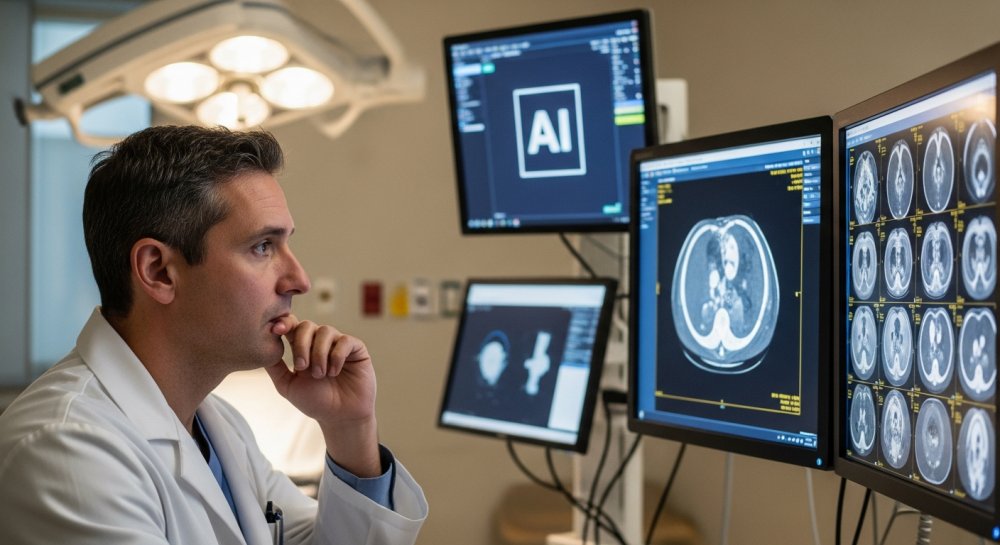
AI-powered diagnostic tools are being deployed in hospitals nationwide, analyzing medical imaging, predicting patient outcomes, and even recommending treatment protocols. Proponents argue these systems can process vast amounts of medical data faster than any human physician, potentially catching diseases earlier and saving lives.
However, medical professionals are sounding alarms about a fundamental problem with current AI technology: these systems lack the ability to recognize their own limitations.
“AI systems can be confidently wrong,” warned medical experts familiar with the technology’s deployment in clinical settings.
This critical flaw represents a stark departure from traditional medical practice, where experienced physicians understand the boundaries of their knowledge and seek second opinions when facing uncertainty. An AI system, by contrast, may deliver a dangerously incorrect diagnosis with the same level of apparent certainty as a correct one—leaving patients and doctors with no warning signs that something has gone wrong.
The implications extend beyond diagnostic errors. As health care systems increasingly rely on AI for resource allocation, treatment recommendations, and patient triage, the technology’s inability to flag its own uncertainty could lead to systemic failures affecting thousands of patients.
Conservative health policy experts emphasize the importance of maintaining physician authority in medical decision-making rather than ceding control to algorithmic systems that cannot be held accountable for their mistakes. Unlike human doctors who face malpractice liability and professional consequences for errors, AI systems operate without personal responsibility or ethical constraints.
The rapid adoption of AI in health care also raises concerns about data privacy and the protection of sensitive medical information. Patient records fed into these systems may be vulnerable to breaches or misuse, threatening Americans’ fundamental right to medical privacy.
Financial incentives are driving much of the AI integration in health care, as hospitals and insurance companies see opportunities to reduce labor costs and increase efficiency. But critics question whether cost-cutting should take priority over the proven doctor-patient relationship that has formed the foundation of American medicine.
Traditional medical practice relies on years of training, clinical experience, and human judgment to navigate the complexities of individual patient care. While AI can process data at unprecedented speeds, it cannot replicate the nuanced understanding that comes from a physician’s firsthand examination and personal knowledge of a patient’s complete medical history.
The technology’s limitations become particularly evident in cases requiring ethical judgment or consideration of quality-of-life factors that cannot be reduced to data points. American patients deserve medical care that respects their individual circumstances and values, not one-size-fits-all algorithmic recommendations.
As the health care industry rushes to embrace AI, policymakers must ensure that proper safeguards are in place to protect patient safety and preserve the human element in medical care. The stakes are too high to allow unproven technology to replace the judgment of trained medical professionals.
Let us know what you think, please share your thoughts in the comments below.
