Science & Tech
America Reclaims Its Destiny Among the Stars

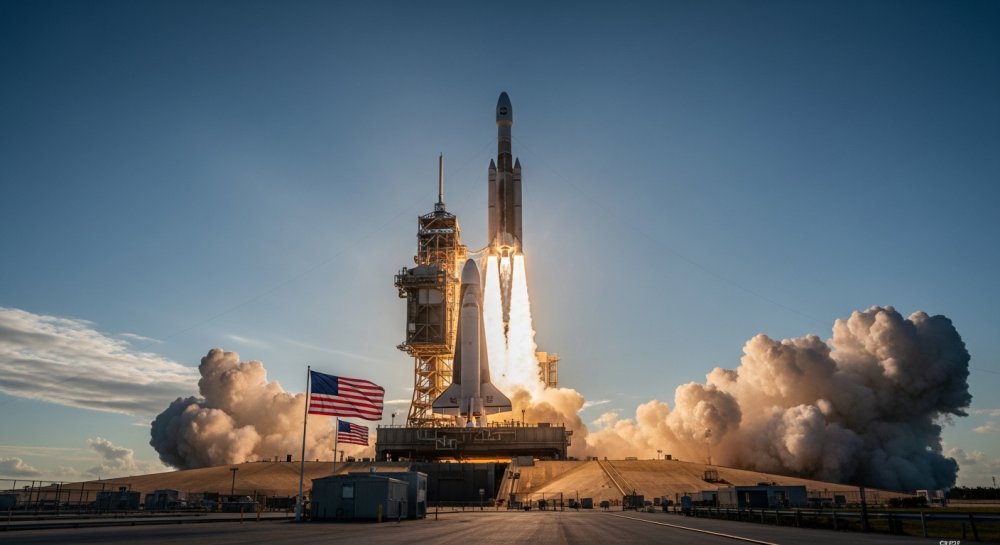
Clear Facts
- Private space companies are launching unprecedented missions beyond Earth’s orbit, marking a new era in American space exploration
- Recent orbital milestones demonstrate capabilities that exceed the Apollo program’s achievements
- Competition from China and other nations has accelerated U.S. investment in space technology and infrastructure
After decades of stagnation, America is finally returning to its rightful place as the world’s leader in space exploration. The private sector, unburdened by government bureaucracy, has reignited the pioneering spirit that once put American boots on the Moon.
What we’re witnessing isn’t just technological progress—it’s the restoration of American exceptionalism. The same innovative drive that built this nation is now propelling us back to the stars, with private enterprise leading the charge where government agencies faltered.
Recent launches have demonstrated capabilities that would have seemed impossible just a decade ago. Reusable rockets, lunar landers, and deep space missions are no longer the stuff of science fiction. They’re operational reality, developed by American companies with American ingenuity.
The contrast with the previous era of space exploration couldn’t be starker. Where government programs were mired in cost overruns and endless delays, private companies are delivering results ahead of schedule and under budget. This is what happens when free market principles are applied to even the most ambitious human endeavors.
China’s aggressive space program has served as a wake-up call. Their lunar ambitions and orbital station construction aren’t just scientific achievements—they’re statements of geopolitical intent. America cannot afford to cede the high ground of space to authoritarian regimes that don’t share our values or respect for freedom.
The national security implications are clear. Space dominance isn’t just about prestige; it’s about protecting American interests and ensuring our technological superiority. From satellite communications to strategic positioning, control of orbital space translates directly into terrestrial power.
Beyond defense considerations, the economic potential of space exploration is staggering. Asteroid mining, orbital manufacturing, and space tourism represent entirely new industries that could generate trillions in wealth. American companies are positioned to lead in all these sectors, creating jobs and prosperity for generations to come.
The regulatory framework has finally caught up with reality. Government agencies are learning to facilitate rather than obstruct, providing oversight without strangling innovation. This balance is crucial—we need safety standards without the suffocating red tape that held us back for so long.
Young Americans are once again looking up at the stars with wonder and ambition. Engineering schools are seeing renewed interest in aerospace programs. The space industry is becoming a magnet for our best and brightest minds, reversing decades of decline in STEM education enthusiasm.
This renaissance in space exploration vindicates those who always believed in American exceptionalism. We were told our best days were behind us, that we should manage decline rather than pursue greatness. That defeatist mentality is being proven wrong with every successful launch.
The Moon is just the beginning. Mars missions are being planned with serious timelines and realistic budgets. Permanent lunar bases, once dismissed as fantasy, are now engineering challenges rather than impossibilities. We’re talking about establishing a human presence beyond Earth within our lifetimes.
Critics who question the cost of space exploration miss the bigger picture. The technologies developed for space travel have revolutionized life on Earth—from GPS to weather satellites to medical devices. The return on investment has always been extraordinary, even when measured in purely economic terms.
More importantly, this isn’t just about dollars and cents. It’s about the human spirit and our destiny as explorers. Great nations don’t retreat from frontiers; they push forward into the unknown. That’s what made America exceptional in the first place, and it’s what will keep us exceptional in the future.
The space race of the 21st century won’t be won by government bureaucracies. It will be won by free enterprise, entrepreneurial vision, and the unleashing of human creativity. America has these advantages in abundance, if we have the wisdom to leverage them.
International cooperation has its place, but make no mistake—this is a competition. The nation that dominates space will dominate the coming century. American leadership in this domain isn’t just preferable; it’s essential for maintaining a world order based on freedom and democracy.
As we stand on the threshold of this new age of exploration, we should remember what got us here. It wasn’t government mandates or international committees. It was American innovation, competitive drive, and the courage to dream big. Those same qualities will take us to the stars.
Let us know what you think, please share your thoughts in the comments below.
