Politics
Los Angeles Councilwoman Blocks Mayor’s Plan to Clear Homeless Encampments

Clear Facts
- Los Angeles City Councilwoman Eunisses Hernandez voted against Mayor Karen Bass’s emergency ordinance to remove homeless encampments from city streets
- Hernandez, a Democratic Socialists of America member, is considering a mayoral challenge to Bass in 2026
- Local residents report witnessing violent crimes, including a fatal shooting, near encampments in their neighborhoods
Los Angeles City Councilwoman Eunisses Hernandez cast the lone dissenting vote against Mayor Karen Bass’s emergency ordinance designed to accelerate the removal of homeless encampments throughout the city. The decision highlights a deepening rift within Los Angeles’s Democratic leadership over how to address the city’s ongoing homelessness crisis.
Hernandez, who represents District 1 and is openly affiliated with the Democratic Socialists of America, has positioned herself as a potential challenger to Bass in the 2026 mayoral race. Her opposition to the emergency measure stands in stark contrast to the overwhelming support from other council members and reflects her consistently progressive voting record on homelessness issues.
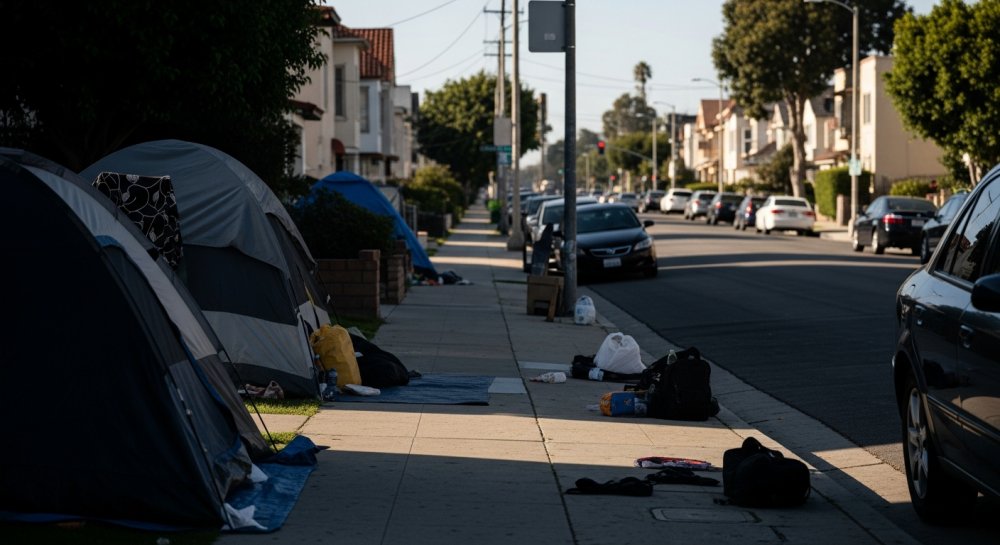
The emergency ordinance, championed by Mayor Bass, aims to streamline the process of clearing encampments from public spaces across Los Angeles. Bass has framed the measure as necessary to address public safety concerns and restore order to neighborhoods overwhelmed by the proliferation of homeless camps.
Local residents have expressed frustration with conditions in their communities. One homeowner described the dire situation in their neighborhood.
“I watched a guy get shot and killed across the street,” the resident stated, illustrating the violent incidents occurring near encampments.
The vote underscores the ideological divide within Los Angeles politics regarding homelessness policy. While Bass and the majority of the council support more aggressive enforcement measures, Hernandez and other progressive activists argue that removal efforts without sufficient housing alternatives constitute inhumane treatment of vulnerable populations.
Critics of Hernandez’s position point to the real-world consequences facing residents and business owners in areas with concentrated encampments. Reports of crime, unsanitary conditions, and quality-of-life degradation have mounted in neighborhoods across the city.
The Democratic Socialists of America, with which Hernandez is aligned, has consistently opposed what they characterize as “sweeps” of homeless populations. The organization advocates instead for housing-first approaches and expanded social services funding.
Hernandez’s potential mayoral bid would likely center on her progressive credentials and opposition to what she views as punitive approaches to homelessness. However, her stance puts her at odds with many residents demanding immediate action on street conditions.
Los Angeles has struggled for years to address its homelessness crisis, with encampments becoming fixtures in neighborhoods throughout the city. The problem has proven resistant to various policy approaches, consuming billions in taxpayer dollars while visible homelessness continues to expand.
The emergency ordinance passed despite Hernandez’s opposition, granting Mayor Bass expanded authority to expedite encampment removals. Implementation of the measure will test whether more aggressive enforcement can deliver the improvements that frustrated residents demand.
As the 2026 mayoral race approaches, the contrasting visions represented by Bass and Hernandez will likely define the central debate over Los Angeles’s future direction on homelessness and public safety.
Let us know what you think, please share your thoughts in the comments below.
