Politics
Why Congress Must Reclaim Authority Over Birthright Citizenship

Clear Facts
- The U.S. Supreme Court recently heard arguments on a case challenging the scope of birthright citizenship under the 14th Amendment
- The legal debate centers on the constitutional phrase “subject to the jurisdiction thereof” and its proper interpretation
- Conservative legal voices argue Congress, not the courts, should decide citizenship policy questions
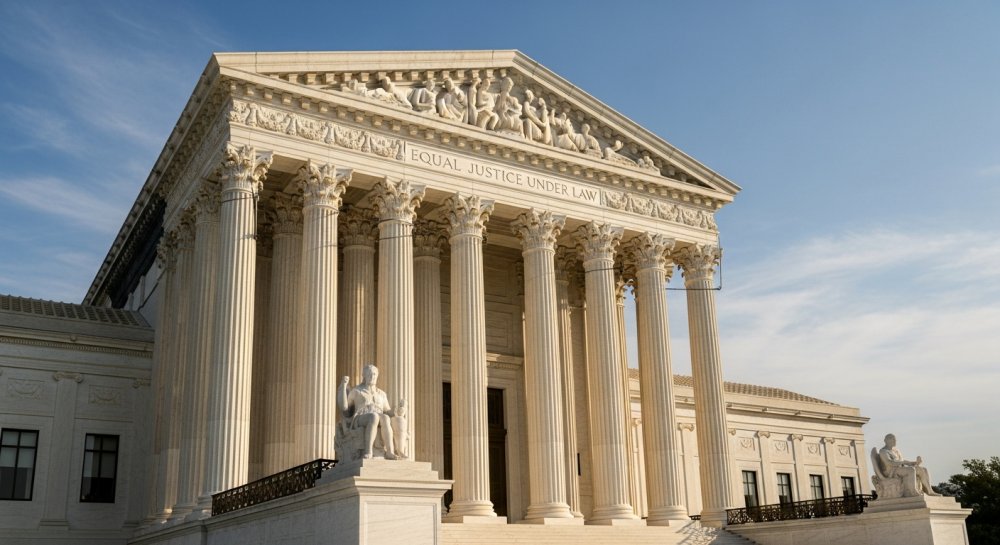
The U.S. Supreme Court recently heard arguments in a case that could redefine one of the most consequential questions in American law: Who is entitled to citizenship under the 14th Amendment? The focus, predictably, has been on constitutional interpretation — what the phrase “subject to the jurisdiction thereof” means, how it has been applied historically, and whether existing precedent supports or contradicts current practice.
But the real question isn’t just constitutional — it’s structural. Who should have the final say on citizenship policy in America?
Conservative legal experts, including former Trump campaign attorney Jenna Ellis, have argued that birthright citizenship is fundamentally a matter for Congress to decide, not the Supreme Court. This position reflects a broader concern about judicial overreach and the proper separation of powers outlined in the Constitution.
The 14th Amendment’s Citizenship Clause states: “All persons born or naturalized in the United States, and subject to the jurisdiction thereof, are citizens of the United States and of the State wherein they reside.” The critical phrase — “subject to the jurisdiction thereof” — has become the focal point of intense legal debate.
Advocates for congressional authority argue that the Framers of the 14th Amendment intended Congress to define the boundaries of citizenship through legislation, not have unelected judges impose permanent interpretations that bind future generations. They point to the original context of the amendment, ratified in 1868 to ensure citizenship for freed slaves, not to create automatic citizenship for anyone born on U.S. soil regardless of parental status.
The current system has created what critics view as perverse incentives. Individuals enter the country illegally, give birth on American soil, and their children automatically receive citizenship — a practice that exists in few other developed nations.
Congress has explicit constitutional authority over immigration and naturalization under Article I, Section 8. This grants the legislative branch the power “to establish a uniform Rule of Naturalization.” Conservatives argue this power should extend to defining the full scope of who becomes a citizen and under what circumstances.
The Supreme Court has never directly ruled on whether children born to illegal immigrants or temporary visitors are entitled to automatic citizenship. The 1898 case United States v. Wong Kim Ark addressed the children of legal permanent residents, not those in the country unlawfully. This leaves substantial room for congressional action without violating settled precedent.
Placing citizenship policy in congressional hands would restore democratic accountability to the process. Elected representatives, answerable to voters every two or six years, would make decisions about who joins the American community. This stands in contrast to lifetime-appointed justices making unreviewable determinations that affect millions.
Critics of judicial supremacy on this issue note that other Western democracies have modified or eliminated unrestricted birthright citizenship through legislative action. The United Kingdom, Australia, New Zealand, Ireland, and France have all revised their citizenship laws through normal democratic processes without constitutional crisis.
The principle at stake extends beyond immigration policy. If the Supreme Court arrogates to itself the final word on citizenship — rather than interpreting Congress’s legitimate exercise of its enumerated powers — it sets a precedent for judicial control over fundamentally political questions that belong in the elected branches.
Conservative constitutional scholars emphasize that defending legislative primacy on citizenship doesn’t require abandoning constitutional principles. It means recognizing that the Constitution grants Congress, not courts, the primary authority to make policy in this arena, subject to genuine constitutional constraints.
The Framers designed a system of separated powers precisely to prevent any single branch from monopolizing authority over fundamental national questions. Citizenship — who becomes an American — is among the most fundamental questions a nation faces.
Rather than waiting for nine justices to issue a ruling that may or may not reflect the original understanding of the 14th Amendment, Congress should exercise its constitutional prerogative to define citizenship criteria clearly and comprehensively. Such legislation would provide certainty, democratic legitimacy, and proper respect for the separation of powers.
The current Supreme Court case may ultimately be decided on narrow grounds or technical procedural issues. But the broader principle remains: Congress, as the people’s elected representatives, should reclaim its rightful authority over American citizenship policy.
Let us know what you think, please share your thoughts in the comments below.
