World News
Escalating Conflict: U.S. and Iranian Forces Exchange Fire in Strategic Waters

Clear Facts
- The United States and Iran exchanged military strikes in the Arabian Gulf region and Strait of Hormuz
- Targets in the conflict included oil tankers and U.S. military bases in Jordan
- The Strait of Hormuz represents one of the world’s most critical oil shipping chokepoints
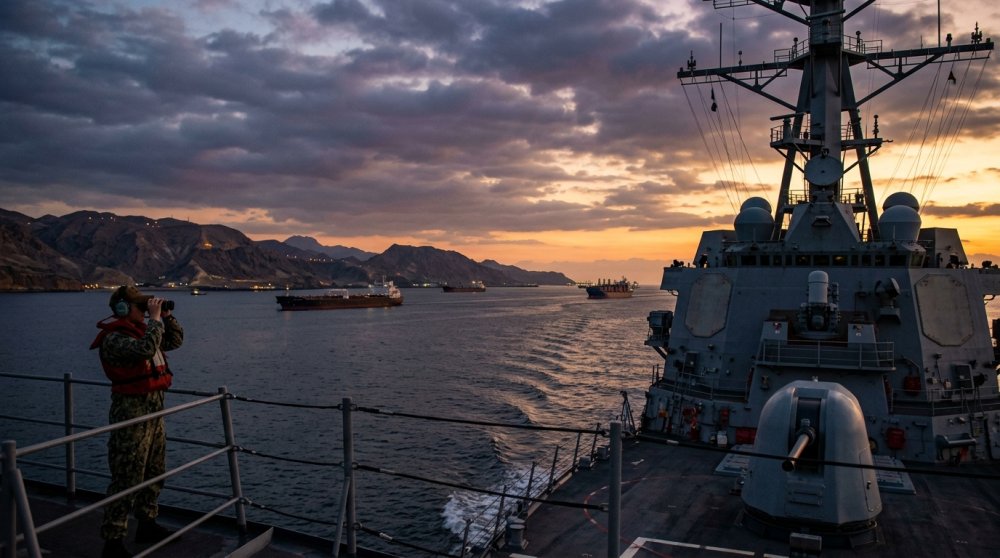
American forces and Iranian military units have engaged in direct conflict across the strategically vital Arabian Gulf region. The exchange of strikes marks a dangerous escalation in tensions between the two nations in waters that serve as a lifeline for global energy markets.
The confrontations involved attacks on commercial oil tankers transiting the region. Iranian forces also targeted U.S. military installations in Jordan, expanding the geographic scope of the hostilities beyond the immediate Gulf waters.
CENTCOM forces destroyed five Iranian crude oil carriers, Sept. 8, after the Islamic Revolutionary Guard Corps (IRGC) targeted a U.S. Navy warship with ballistic missiles twice over the past two days. The U.S. warship successfully evaded the attempted Iranian attacks and… pic.twitter.com/Gi8a2tloN1
— U.S. Central Command (@CENTCOM) September 8, 2026
M/T Riesco sinks in the Gulf of Oman, Sept. 8, after being destroyed by CENTCOM forces in response to attempted IRGC attacks on a U.S. Navy warship. pic.twitter.com/EkmG8uyMT9
— U.S. Central Command (@CENTCOM) September 9, 2026
🚫 CLAIM: Iran’s Islamic Revolutionary Guard Corps (IRGC) forces have claimed they struck two U.S. Navy destroyers operating in the Middle East. This is completely FALSE.
✅ FACT: No U.S. Navy warship has been struck; all IRGC attempted attacks failed. Meanwhile, U.S. forces… pic.twitter.com/yfC4OcwZ1f
— U.S. Central Command (@CENTCOM) September 9, 2026
The Strait of Hormuz serves as the world’s most important oil transit chokepoint, with roughly one-fifth of global petroleum passing through the narrow waterway. Any disruption to shipping in this corridor carries immediate consequences for energy prices and supply chains worldwide.
U.S. military forces maintain a substantial presence throughout the region to protect freedom of navigation and ensure the security of international commerce. American bases in Jordan provide critical support for operations across the Middle East and serve as key logistics hubs for regional stability operations.
The attacks on U.S. facilities represent a direct challenge to American interests and the safety of service members deployed to protect allies and partners. Iran’s Islamic Revolutionary Guard Corps has previously threatened shipping lanes and harassed commercial vessels transiting international waters.
This latest round of hostilities underscores the ongoing threat posed by Iranian aggression in the region. Tehran’s willingness to strike both military and civilian targets demonstrates the regime’s disregard for international norms and the safety of global commerce.
The strategic importance of the Arabian Gulf cannot be overstated for American energy security and economic interests. Maintaining open sea lanes and deterring Iranian attacks remains a top priority for U.S. Central Command forces operating in the theater.
Let us know what you think, please share your thoughts in the comments below.
