World News
Trump’s Diplomatic Strategy Reveals How Personal Rapport Shapes Global Relations

Clear Facts
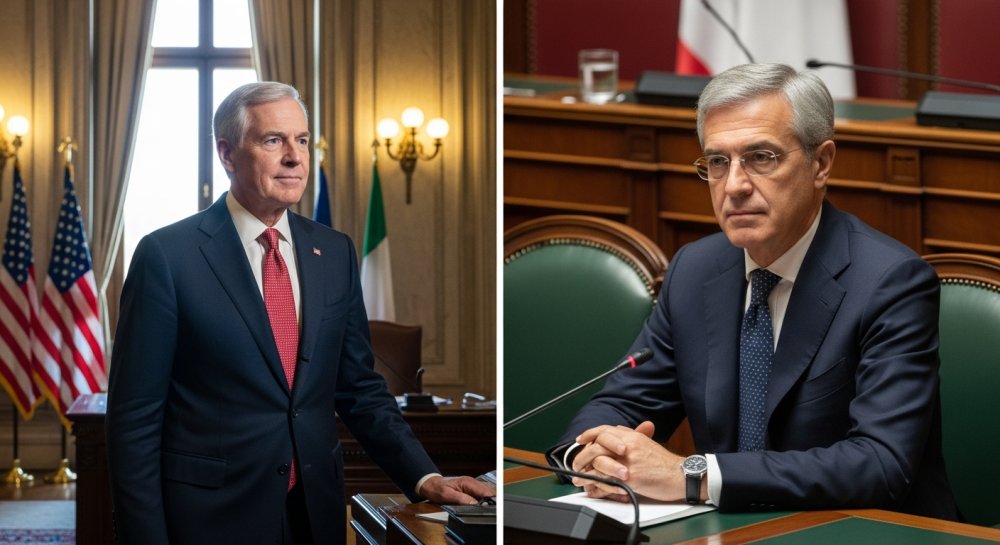
- President Trump and Italian Prime Minister Giorgia Meloni engaged in a public dispute over claims about a photo opportunity, with Italy’s foreign minister subsequently canceling a planned U.S. visit
- Israeli newspaper Israel Hayom, owned by major Trump donor Miriam Adelson, criticized the president’s Iran agreement, calling it a “surrender” to a terror regime
- Trump has demonstrated a consistent pattern of both confrontation and reconciliation with foreign and domestic leaders, from Ukraine’s Zelenskyy to New York Mayor Zohran Mamdani, based largely on personal interactions
President Donald Trump’s approach to international relations demonstrates how personal dynamics shape American foreign policy at the highest levels. Recent tensions with traditional allies reveal both the strengths and challenges of a relationship-driven diplomatic strategy.
The president’s current dispute with Italian Prime Minister Giorgia Meloni centers on competing accounts of a photo opportunity. Trump stated: “She begged me to take a picture with her. She wanted a picture with me so badly. I wouldn’t have taken it, but I felt sorry for her.”
“Donald Trump’s statements are completely made up,” Meloni responded. “I am frankly astonished. I don’t know why the president of the United States behaves like this towards his allies: it is not the first time, moreover… There is one thing he should remember: Neither I nor Italy ever beg.”
The exchange prompted Italy’s foreign minister to cancel a scheduled U.S. visit, highlighting how personal friction can have immediate diplomatic consequences. Meloni, previously considered a strong U.S. ally among European leaders, has pushed back forcefully against what she views as fabricated claims.
Meanwhile, criticism of Trump’s Iran memorandum of understanding has emerged from another unexpected quarter. Israel Hayom, the top Israeli newspaper owned by billionaire donor Miriam Adelson, published a scathing critique under the headline: “You could have been the greatest president of all, but you failed.”
Danny Zaken wrote that Trump “may be remembered forever as the president who brought about America’s humiliation.”
“You made a colossal mistake. You failed by signing a surrender agreement with a murderous and cruel terror regime… We feel betrayed, nothing less, because your heart was, it seemed, in the right place, with all your flaws,” he added.
Adelson, widow of casino magnate Sheldon Adelson, received the Presidential Medal of Freedom from Trump in 2018 and has contributed substantial sums to pro-Trump political efforts. Her newspaper’s criticism reflects broader Israeli concerns about the Iran agreement and ongoing tensions with Prime Minister Benjamin Netanyahu.
The president has expressed frustration with Netanyahu over continued military operations in Lebanon against Iran-backed Hezbollah. These attacks prompted Iran to cancel a planned agreement signing with Vice President JD Vance in Switzerland, complicating diplomatic efforts.
Perhaps no diplomatic encounter better illustrates Trump’s personal approach than his confrontation with Ukrainian President Volodymyr Zelenskyy. The president canceled their planned White House lunch and ended their meeting abruptly after tensions flared, with both Trump and Vance publicly criticizing the Ukrainian leader.
However, Trump and Zelenskyy have since reconciled, meeting at the G-7 summit in France. The relationship repair demonstrates the president’s capacity for both confrontation and cooperation based on evolving personal dynamics.
A striking example of how personal charm can influence Trump’s position involves New York Mayor Zohran Mamdani. During the mayoral campaign, Trump relentlessly attacked Mamdani, threatening federal intervention and fund withdrawal.
He called Mamdani a “communist lunatic” who hates the police and Jewish people, declaring “we’re not going to ruin one of our great cities… We will clean up the crime in about 30 days.”
Following Mamdani’s election victory and subsequent White House visit, Trump’s tone shifted dramatically.
“I met with a man who’s a very rational person. I met with a man who wants to see – really wants to see – New York be great again,” Trump said. “I’ll be cheering for him.”
“We agree on a lot more than I would have thought I want him to do a great job, and we’ll help him do a great job,” the president added.
Mamdani, who previously labeled Trump a “fascist” and “despot,” also praised their conversation. At a second meeting, the mayor presented Trump with a mock New York Daily News front page depicting the president as a champion builder who could transform the city.
Reports indicate the two leaders have been texting regularly despite occasional policy disagreements, illustrating how personal rapport can transcend ideological differences.
The president’s approach extends to territorial ambitions as well. When pursuing control of Greenland, an autonomous Danish territory, Trump threatened a 10% tariff on goods from Denmark and seven other European countries. This partly resulted from the Danish prime minister’s refusal to negotiate under what she characterized as blackmail.
Regarding the Italy dispute, both leaders continued their public exchange over the weekend. Trump posted:
“She wouldn’t even let us use Italy’s landing strips or runways, a great logistical inconvenience, and this despite the fact the U.S. contributes hundreds of Billions of Dollars a year to protect Italy, and other ‘so-called’ NATO Allies. Now, after the United States defeated Iran militarily, she wants to be friends again in order to get her ‘numbers up.’ No thanks!!!”
Meloni called the president’s attacks “senseless,” responding: “As for my popularity, being your friend has certainly not helped it, nor does it depend on my relationship with you… I suggest you focus on yours.”
The exchange reflects both leaders’ determination to have the final word in their public dispute.
All politics naturally involves relationship-building to some degree. Successful candidates seek endorsements, and effective lawmakers cultivate colleagues when advancing legislation. Personal connections have always mattered in governance.
With President Trump, however, personal relationships constitute the fundamental framework for conducting both domestic and international affairs. This approach produces both rapid policy shifts and unexpected alliances, as allies and adversaries alike navigate the decisive importance of personal rapport with the president.
Let us know what you think, please share your thoughts in the comments below.
