World News
Rubio Declares Iran Has No Authority Over Critical Shipping Lane

Clear Facts
- Secretary of State Marco Rubio rejected Iran’s authority to charge tolls on vessels passing through the Strait of Hormuz
- Rubio’s statement emphasizes international law governing maritime passage through the strategic waterway
- The Strait of Hormuz is a critical chokepoint for global oil shipments and international commerce
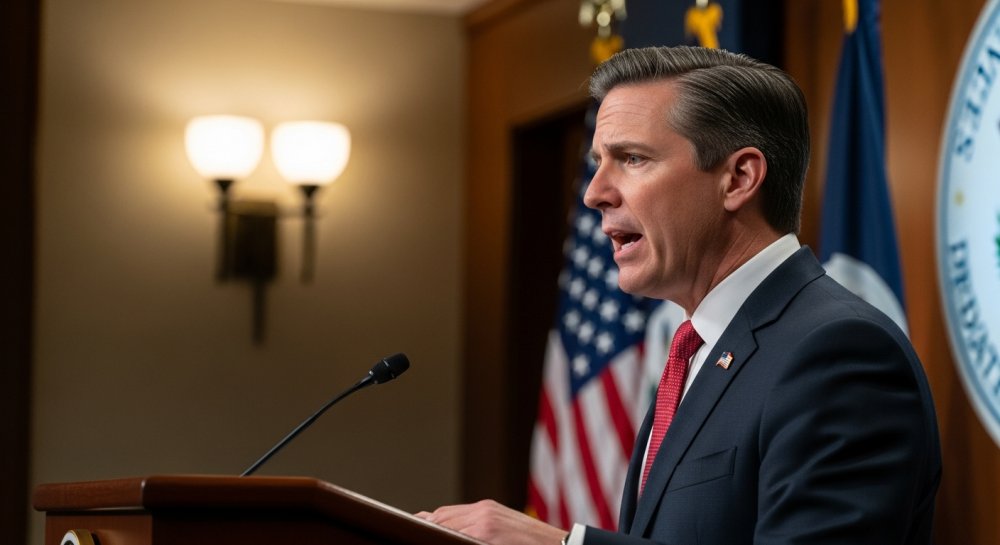
Secretary of State Marco Rubio issued a firm declaration on American policy regarding one of the world’s most strategic waterways. In a statement reinforcing international maritime law, Rubio made clear that Iran has no legitimate authority to impose tolls on vessels transiting the Strait of Hormuz.
The Secretary of State’s position upholds long-standing principles of freedom of navigation through international straits. The Strait of Hormuz serves as a vital passage for global energy markets, with approximately one-fifth of the world’s petroleum passing through the narrow waterway between Iran and the Arabian Peninsula.
SECRETARY RUBIO: "No country is allowed to charge tolls or fees on an international waterway." pic.twitter.com/eFAbLRtOIc
— Department of State (@StateDept) June 23, 2026
“Iran won’t charge tolls on the Strait of Hormuz,” Rubio stated, emphasizing the administration’s commitment to protecting international shipping rights.
The strait, only 21 miles wide at its narrowest point, has been a recurring flashpoint in tensions between Iran and Western nations. Iran’s Islamic Revolutionary Guard Corps has previously threatened to close the waterway during periods of heightened conflict, raising concerns about global energy security and the free flow of commerce.
Rubio’s declaration reinforces America’s role in safeguarding freedom of the seas and protecting vital economic interests. The United Nations Convention on the Law of the Sea guarantees the right of transit passage through international straits used for navigation between one part of the high seas and another.
The Secretary of State’s statement comes as the administration maintains a strong posture toward Iranian aggression in the region. By clearly articulating that Iran lacks the authority to impose such tolls, Rubio signals that the United States will continue to defend international law and the principle of free navigation.
This position protects not only American interests but also those of allies and trading partners who depend on unimpeded access to global shipping lanes. Any attempt by Iran to restrict passage or impose fees would constitute a violation of international maritime law and threaten the stability of global energy markets.
Let us know what you think, please share your thoughts in the comments below.
