U.S. News
Thomas Jefferson’s Hidden Workshop Revealed After 250 Years

Clear Facts
- Archaeologists discovered a 250-year-old kiln at Monticello used to create bricks for Thomas Jefferson’s iconic home
- The kiln was operational during the initial construction phase of Monticello in the 1770s
- The discovery provides new insights into Jefferson’s hands-on approach to building his mountaintop estate
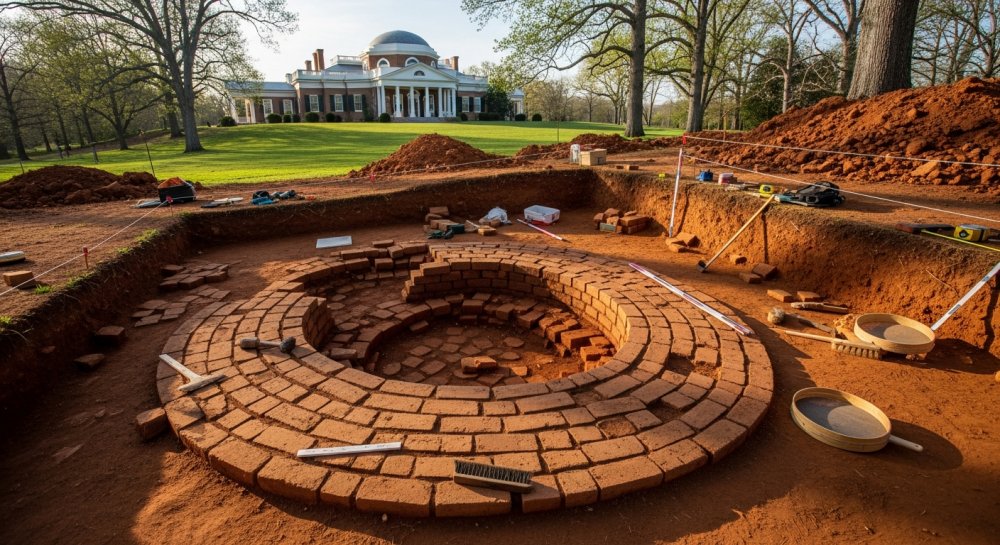
A remarkable archaeological discovery at Thomas Jefferson’s Monticello estate is opening new windows into how America’s third president built his legendary Virginia home. Researchers have unearthed a 250-year-old brick kiln that played a crucial role in the construction of one of our nation’s most historic sites.
The kiln, dating back to the 1770s, represents a tangible connection to Jefferson’s vision and determination to create his mountaintop masterpiece. This discovery demonstrates the Founding Father’s meticulous planning and self-reliance — values that defined both his personal life and his political philosophy.
Archaeological teams working at the site have confirmed that this kiln was operational during Monticello’s initial construction phase. The structure would have been essential for producing the thousands of bricks needed to build Jefferson’s architectural achievement. Rather than relying entirely on outside suppliers, Jefferson established his own brick-making operation on the property.
The find underscores Jefferson’s characteristic independence and resourcefulness. By producing materials on-site, he maintained greater control over the quality and timing of construction. This approach reflected the same self-sufficient ideals he championed for the young American republic.
Monticello, which took nearly 40 years to complete, stands as a testament to Jefferson’s vision and perseverance. The estate has been recognized as a UNESCO World Heritage Site, drawing visitors from around the world who seek to understand the mind and methods of one of America’s most influential founders.
The kiln’s discovery adds another layer to our understanding of how Jefferson approached challenges — with innovation, determination, and a hands-on mentality. These same qualities guided him through his service as Governor of Virginia, Minister to France, Secretary of State, Vice President, and ultimately President of the United States.
Preservation efforts at Monticello continue to reveal new details about Jefferson’s life and times. Each discovery enriches our connection to the founding era and reminds us of the vision and work required to build both a home and a nation.
Let us know what you think, please share your thoughts in the comments below.
