Politics
Collins Defies Early Polls in Maine Senate Battle

Clear Facts
- Sen. Susan Collins (R-ME) is currently performing better in polling than she did at this stage in her successful 2020 reelection campaign
- A New York Times/Portland Press Herald/Siena survey shows Democrat challenger Graham Platner with a narrow lead in the 2026 Senate race
- Collins has a proven track record of outperforming early polling predictions in Maine elections
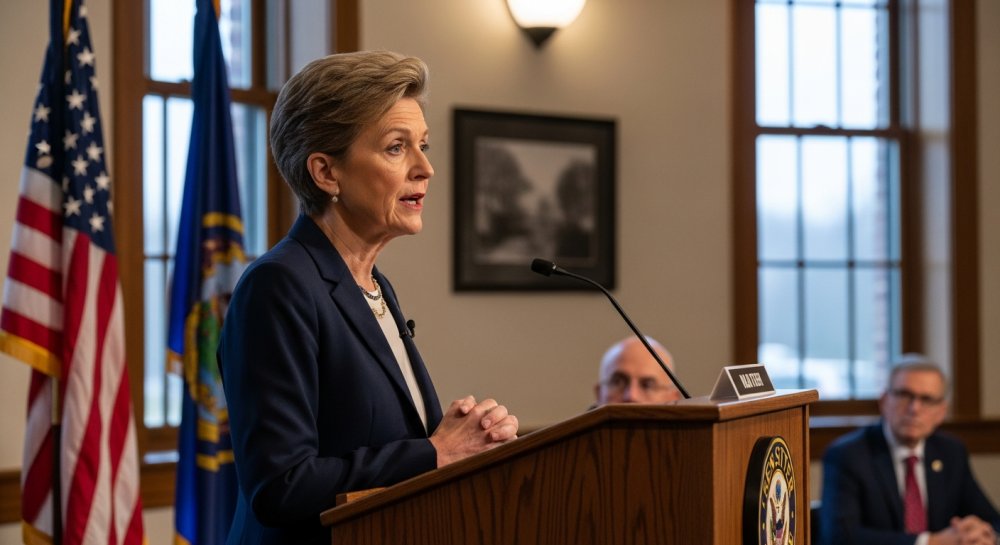
Sen. Susan Collins (R-ME) is demonstrating stronger polling numbers in her 2026 reelection bid compared to where she stood at this point in her 2020 campaign, despite recent surveys showing her Democratic challenger Graham Platner with a slight edge. The development suggests Collins may once again defy early polling expectations in what is shaping up to be a closely watched Senate contest.
A recent New York Times/Portland Press Herald/Siena survey indicates Platner holds a narrow lead over the incumbent Republican senator. However, Collins’ current standing represents an improvement over her position during the same period in her 2020 reelection cycle, when she ultimately secured victory despite trailing in numerous public polls.
The Maine Republican has built a reputation for outperforming polling predictions throughout her Senate career. Her ability to connect with independent voters and maintain support across party lines has consistently proven more durable than pre-election surveys have suggested.
Collins’ resilience in Maine politics reflects her decades-long presence in the state and her carefully cultivated moderate image. The senator has served in the U.S. Senate since 1997, establishing herself as one of the chamber’s most experienced members.
The 2026 race carries significant implications for Senate control, with Republicans seeking to maintain or expand their majority. Maine’s competitive political landscape makes it a key battleground state, with both parties expected to invest heavily in the contest as Election Day approaches.
Platner, the Democratic challenger, faces the considerable challenge of unseating a well-known incumbent with deep roots in the state. The narrow polling advantage he currently holds may prove insufficient given Collins’ historical pattern of exceeding survey predictions.
Political observers note that early polling in Maine Senate races has often failed to capture the full extent of Collins’ support among moderate and independent voters who make their final decisions closer to Election Day.
Let us know what you think, please share your thoughts in the comments below.

Theophan
June 30, 2026 at 5:23 am
She’s just lucky that one of the very worst candidates in the nation is her opponent.
P Hustle
June 30, 2026 at 8:09 am
I reject your reality and replace it with my own. The Head of the Maine AFL-CIO called for firing squads to eliminate democrats who don’t vote for me after the revolution.
Jake
June 30, 2026 at 9:52 am
Yep, Maine has some serious problems and some choices to make in this election.
Dave
June 30, 2026 at 2:13 pm
What does it matter, she may as well be a democrat, she votes like one in the senate. Remember, Collins voted against the Save America Act that over 80% of the population wanted. That’s not representation, that’s activism. I couldn’t care less whether she wins, she’s a RINO. Good riddance Susan
Jim
June 30, 2026 at 2:46 pm
What it means is that the Republicans have a better chance at continued leadership of the Senate and of preventing the removal of the current President from office, that’s what difference it makes!!
Festus
June 30, 2026 at 3:08 pm
And don’t forget commie nazi traitor rat bastard.
Bernie
July 7, 2026 at 12:15 pm
I like p-hustle. He’s a great democrat!! He should not drop out! Nobody likes a quitter!!! GO P-HUSTLE!!! Ha ha hahaha zig Heil!!ha haha ha ha!!! Morons!!