Sports
NCAA Tournament Expansion to 76 Teams Follows the Money Trail

Clear Facts
- The NCAA Tournament will expand from 68 to 76 teams starting next season, adding 8 additional spots through opening round games
- The expansion creates more television inventory and advertising opportunities, with formal announcement expected next month from NCAA and broadcast partners
- 52 teams will receive automatic entry to the first round, while 24 teams will compete in opening round matchups across two cities
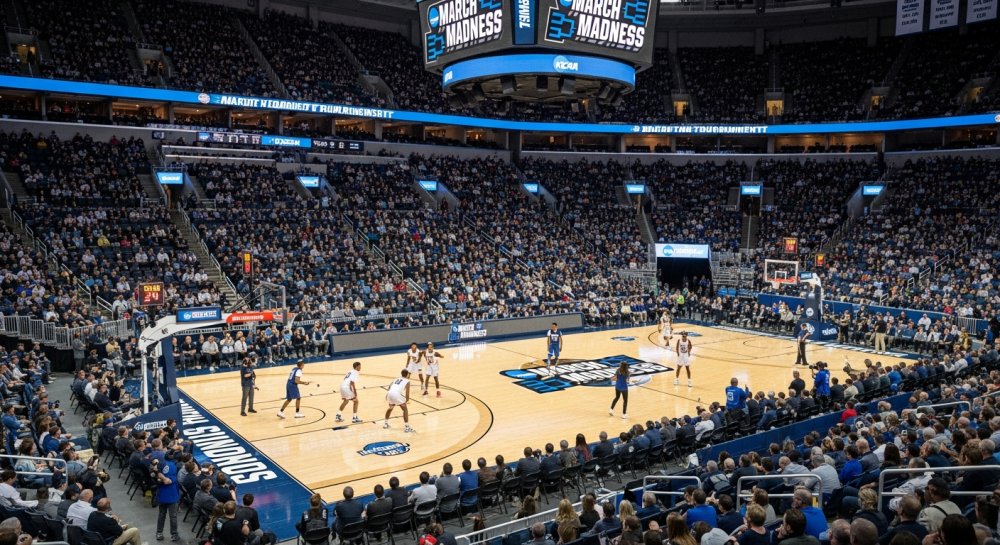
The NCAA Tournament is set to expand to 76 teams next season, and make no mistake—this decision is driven by revenue, not competitive fairness. After months of deliberation, the NCAA has chosen to capitalize on record-breaking ratings rather than preserve the tournament’s existing format.
The move mirrors the ongoing expansion debate in college football playoffs, where committee members pushed for more spots after just one 12-team season. A formal announcement from the NCAA and its television partners is expected next month, once final details with advertisers are finalized.
The question remains: which teams actually deserved spots this past season? Social media responses pointed almost exclusively to Belmont—not Auburn, despite their last-minute push to impress the selection committee. The lack of compelling bubble teams raises doubts about the necessity of expansion.
Predictably, conference commissioners, coaches and athletic directors have voiced support for the expansion. The reason is transparent: power conferences stand to gain additional bids, while mid-major programs will continue fighting for recognition.
“I think it’s appropriate,” Tennessee AD Danny White said this week.
“There’s now 350-plus Division I schools, and you start thinking about the percentage of that group that can make the postseason. Playing in the NCAA Tournament is an awesome experience, it’s something that basketball players, men and women, will remember for the rest of their lives. So I’m all for it, I think it’s healthy.”
The argument that more Division I schools justify more tournament spots amounts to a participation trophy mentality. Teams like Miami (Ohio) earned their opportunity through merit this past season. But will 10th-place finishers from the SEC, Big Ten, ACC or Big 12 now take spots from deserving mid-major programs?
The answer comes down to television ratings. Which conferences generate bigger audiences for opening round games featuring 24 teams across 12 matchups on Tuesday and Wednesday? Money dictates these decisions, and expanding the tournament field increases inventory for television networks and advertising revenue for the NCAA.
The new format eliminates the “First Four” currently held in Dayton, replacing it with opening round games spread across two cities. Fifty-two teams will advance directly to the first round starting Thursday, while 24 teams compete for the remaining spots. The opening round will include all 16 seeds, half the 15 seeds, some 12 seeds, and a few 11 seeds.
The financial benefits are clear, though modest for individual programs. Some teams will earn enough from tournament appearances to support their basketball budgets. However, the women’s tournament already struggles to fill arenas during opening rounds—adding more teams compounds this challenge.
The NCAA faces mounting financial pressures from the House settlement and ongoing legal battles. Additional tournament revenue addresses these concerns, but at what cost to the regular season and tournament integrity?
Fans made their preferences clear this past season—the tournament was in a strong position without expansion. Record ratings and engaged audiences suggested no urgent need for change. Yet the expansion proceeds regardless, following the same pattern as college football playoff expansion.
Proponents frame this as inclusion, but the reality is financial. Television networks gain programming inventory, the NCAA secures advertising dollars, and power conferences capture additional bids. The competitive argument rings hollow when so few deserving teams were excluded under the current format.
Let us know what you think, please share your thoughts in the comments below.
