World News
NATO Snub Raises Fresh Questions About U.S. Commitment

Clear Facts
- President Trump criticized NATO allies for refusing to assist in the joint U.S.-Israel military operation against Iran.
- The President noted that the United States spends hundreds of billions of dollars annually to protect alliance members.
- Trump signaled that his administration may reconsider America’s involvement in NATO due to this lack of reciprocity.
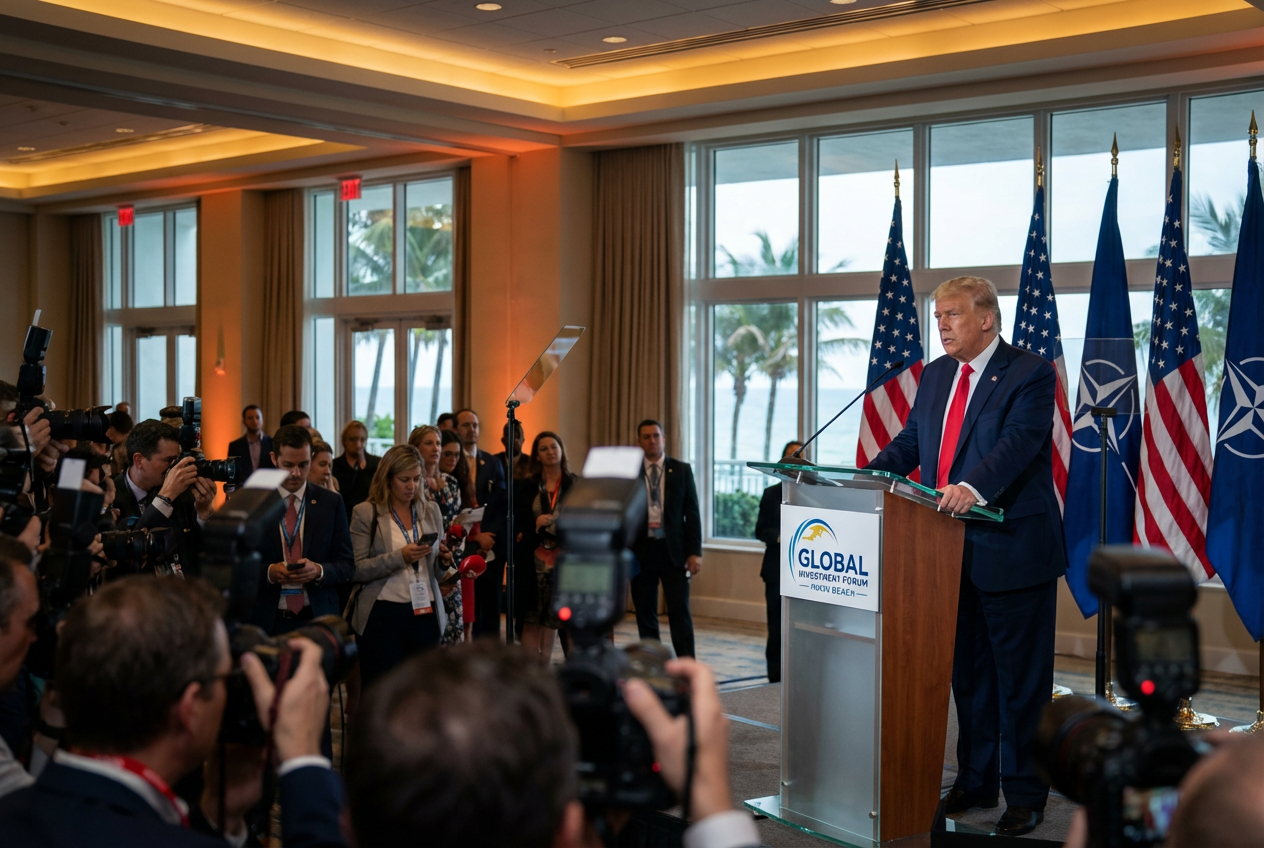
President Donald Trump issued a stern warning to NATO allies during an investment conference in Miami Beach.
He said he was deeply dissatisfied with the alliance’s failure to support the U.S. and Israel in efforts to neutralize the Iranian threat.
“We’re very disappointed, by the way, with NATO. They didn’t come to our aid,” he remarked.
The President highlighted French President Emmanuel Macron for offering aid only after the primary conflict had concluded.
He called the gesture unhelpful and argued that the alliance made a grave error by distancing itself from the security of the region.
“We spend hundreds of billions of dollars a year on NATO, protecting them, and we would have always been there for them,” Trump said.
“But now, based on their actions, I guess we don’t have to be.”
Trump emphasized that the American commitment must be a two-way street if the alliance is to remain viable.
He questioned why American resources should be deployed for nations that do not stand by the U.S. when it is under pressure.
“Why would we be there for them if they’re not there for us?” he added.
The President also took to social media to reiterate that NATO has become a paper tiger without the presence of the United States.
He reminded supporters that he previously challenged member states to meet their financial defense obligations under his first administration.
“I’ve always said NATO’s a paper tiger,” Trump said at the conference.
“And I’ve always said we help NATO, but they’ll never help us.”
The administration’s frustration stems from the disproportionate burden placed on American taxpayers to defend European nations that abstain from critical global security operations.
This tension marks a significant turning point in international relations as the U.S. prioritizes its own strategic interests.
Let us know what you think, please share your thoughts in the comments below.
