World News
Digital Ballots Threaten South Korean Democracy

Clear Facts
- South Korean President Lee Jae-Myung faces ongoing allegations of election irregularities during his rise to power.
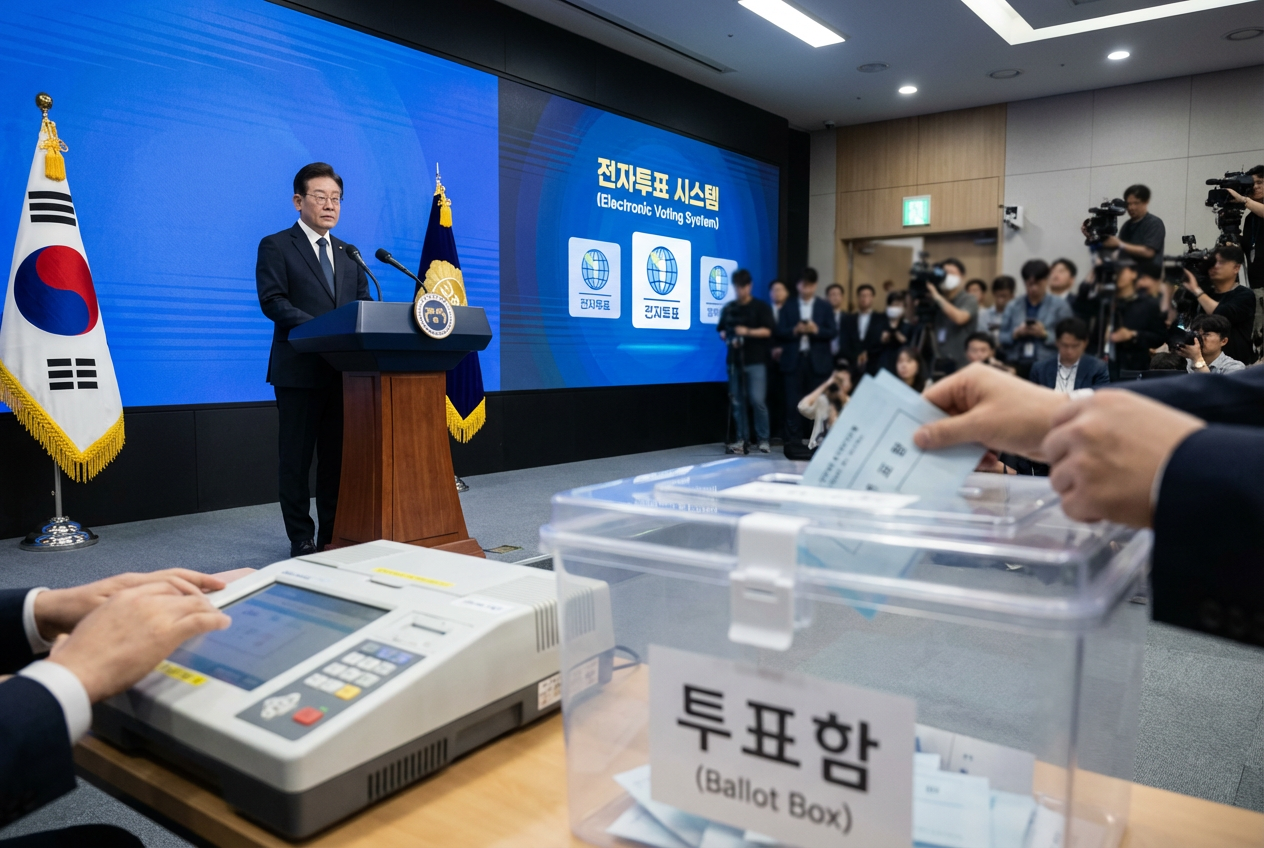
- The Lee administration is advancing a bill for electronic voting for South Korean citizens living abroad, citing modernization.
- Comparisons are being made to Taiwan’s transparent hand-count election process to highlight concerns about digital voting manipulation.
South Korea’s new President, Lee Jae-Myung, is moving swiftly to expand electronic voting—a process already under scrutiny for previous alleged voting irregularities.
He recently promoted a bill to implement electronic voting for over seven million Koreans overseas, presenting it as a necessary upgrade for convenience and modernization.
For citizens wary of past statistical anomalies in election results, this shift appears less about progress and more about entrenching a flawed system.
“This is not modernization. Rather, it is gaslighting on a national scale.”
Data from the 2020 elections showed inexplicable gaps between early and same-day voting, with conservative gains on election day being reversed by large margins in the early votes—often processed by machines.
Lee Jae-Myung notably benefited from these unusual early vote counts, which outstripped pre-election expectations and contradicted exit polls.
Statistical experts have raised doubts, but the administration has not moved toward greater electoral transparency or independent oversight.
“A political figure whose very legitimacy is questioned by opponents due to the ‘ghosts in the machine’ should be the first to demand transparency.”
Instead, the government now aims to extend a system seen as opaque and vulnerable to digital manipulation, further increasing public distrust.
Meanwhile, Taiwan’s method of hand-counted, in-person paper ballots delivers a transparent and public tabulation process, highlighting a sharp contrast.
“It is slow, it is manual, but it is impossible to hack.”
Calls for similar reforms in South Korea have grown, with many preferring a system that cannot be influenced by digital algorithms.
In the U.S., President Donald Trump has underscored the necessity of secure, transparent elections, linking ballot integrity to national sovereignty.
If South Korea continues down the digital path, it risks becoming susceptible to both domestic and foreign manipulation, undermining its alliance with the United States and threatening regional security.
The wider struggle is clear: maintain fair elections through trusted methods, or risk control by those with their hands on the digital levers.
Let us know what you think, please share your thoughts in the comments below.
