U.S. News
Route 66 Marks Century With Discovery That Changed Our View of the Universe

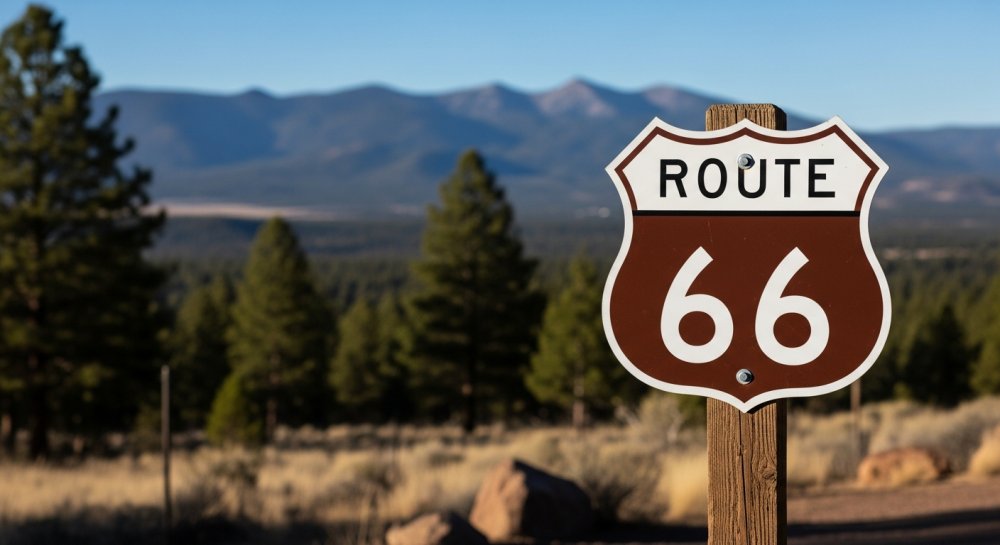
Clear Facts
- U.S. Route 66, stretching 2,448 miles from Chicago to Santa Monica, celebrates its 100th anniversary as one of America’s most iconic highways
- Northern Arizona’s Route 66 corridor features multiple cosmic landmarks, including Meteor Crater and Lowell Observatory where Pluto was discovered in 1930
- NASA selected Flagstaff terrain in the 1960s to train Apollo astronauts for lunar missions due to its moon-like landscape
U.S. Route 66 is celebrating 100 years since it became one of the most iconic corridors in American history. The road stretches 2,448 miles, starting in Chicago and ending in Santa Monica, California.
Although the historic highway was decommissioned in the mid-1980s, towns and states created organizations to preserve what was left of the road. With hundreds of miles running through the American Southwest, some of the out-of-this-world landmarks are found in Northern Arizona.
There is little doubt that Meteor Crater, considered one of the world’s best-preserved meteorite impact sites, is one of the route’s most notable cosmic stops. But in the 1950s, people also reported a UFO crash in Kingman, Arizona, on the western portion of the route.
Midway across Arizona’s stretch of Route 66 is Flagstaff, which locals call a gateway to the Grand Canyon — and to outer space. Before Route 66 was built, astronomer Percival Lowell moved to Flagstaff to build an observatory.
“They look up, and they see what looks like a big birthday cake up on the side of the hill,”
Lowell Observatory historian Kevin Schindler said.
Percival Lowell believed there could be life on another planet, specifically Mars. His pioneering work established a foundation for future space exploration that would define American scientific achievement.
“And we know today that we haven’t found any intelligent life on Mars. But he built this consciousness that it could be there,”
Schindler said.
Then, in 1930, another astronomer, Clyde Tombaugh, discovered what was then considered the ninth planet, Pluto. This momentous discovery put a small Arizona town on the map of world scientific achievement.
“And the fellow who discovered Pluto, Clyde Tombaugh, was born in Streator, Illinois. Not all that far off of Route 66, and then he made his great discovery right here,”
Schindler said.
The observatory still has the telescope used to identify Pluto and uses it for educational purposes. This preservation of American scientific history demonstrates the enduring value of our nation’s pioneering spirit.
NASA has also gravitated to Flagstaff for training. In the 1960s, Apollo astronauts did lunar training at the Cinder Lake Crater Field, just northeast of the town.
NASA scientists also used the terrain north of Flagstaff as a simulation of the moon, testing rovers and equipment. The choice of American heartland terrain for preparing our astronauts speaks to the unique geological features found along this historic corridor.
Let us know what you think, please share your thoughts in the comments below.
