Science & Tech
America Reclaims the Skies With NASA’s First Major Wind Tunnel in Four Decades

Clear Facts
- NASA opened its first major new wind tunnel in over 40 years at Virginia’s Langley Research Center, replacing two facilities that operated for more than 80 years
- The Flight Dynamics Research Facility features a 25,000-square-foot testing area with wind speeds up to 117 mph, nearly ten times more powerful than previous capabilities
- The modernized facility will test technology for missions to Venus, Titan, the Moon, and Mars, as well as next-generation aircraft and autonomous vehicles
NASA marked a significant return to American aerospace dominance Friday with the opening of the Flight Dynamics Research Facility at Langley Research Center in Hampton, Virginia. The milestone represents the agency’s first major new wind tunnel in more than four decades.
The state-of-the-art facility replaces two aging installations that had served the nation for over 80 years. Built through a partnership with the U.S. General Services Administration, the new tunnel brings cutting-edge testing capabilities under one roof, positioning America to maintain its competitive edge in both aeronautics and space exploration.
“The opening of the Flight Dynamics Research Facility represents a significant advancement for NASA and for the nation,” said Dr. Trina Dyal, NASA Langley center director.
“By bringing modernized testing capabilities under one roof, we are enabling transformative research that will ensure the United States remains at the forefront of aeronautics and exploration.”
The facility addresses a critical need as America faces intensifying competition from China in the space domain. By replacing outdated infrastructure with next-generation capabilities, NASA is positioning itself to lead future missions while reducing the cost burden of maintaining aging facilities.
NASA Administrator Jared Isaacman emphasized the importance of this strategic shift in resource allocation.
“If we continue to invest our resources, maintaining a lot of our historic facilities that have less current or anticipated demand, it will come directly at the expense of the next generation capabilities that are going to be essential to again, meet the mission of today and also all that we imagine go forward.”
The 25,000-square-foot facility houses a vertical test section measuring 20 feet in diameter and 24 feet tall. Four 750-horsepower motors drive the system, each paired with a 14-foot-diameter, eight-bladed fan constructed from lightweight carbon fiber that allows engineers to rapidly adjust airflow during free-flight testing.
The temperature-controlled tunnel can generate wind speeds of up to 117 mph, representing a nearly tenfold increase in capability over previous facilities. This dramatic improvement enables testing under conditions that more closely simulate the extreme environments of planetary atmospheres.
“The capabilities in terms of wind speed that this can provide are much greater,” said Giovanny Guecha, technical lead for the NASA Dragonfly parachute decelerator system.
“It’s almost a factor of ten compared to the previous way it’s been done. So that helps us, you know, test more stressful conditions that are closer to Venus.”
The facility will play a central role in developing technology for exploration missions to Venus and Titan, Saturn’s largest moon, as well as continued missions to Earth’s Moon and Mars. It can evaluate scale models of vehicles designed to travel through planetary atmospheres, including spacecraft returning to Earth.
David Storch, facility manager for NASA’s transonic dynamics tunnel, underscored the facility’s vital importance to America’s space program.
“This facility will absolutely have a role in every future space mission. You know, anything that has to come back to earth. Absolutely.”
Beyond space exploration, the wind tunnel will serve as a critical testing ground for the next generation of American aircraft. The facility will evaluate X-planes, drones, autonomous flight vehicles, and commercial aircraft designs, ensuring that the United States maintains its leadership in aviation technology.
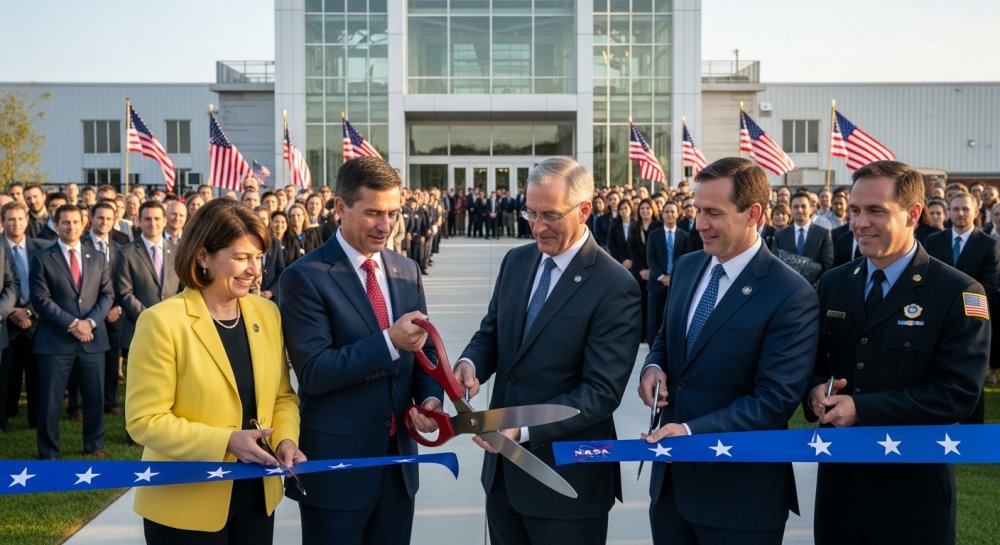
NASA celebrated the facility’s opening with a ribbon-cutting ceremony attended by hundreds of industry leaders, government officials, and community members. The event showcased America’s renewed commitment to aerospace excellence and technological innovation.
The investment in modern infrastructure represents a strategic priority for maintaining American technological superiority. Rather than pouring resources into maintaining outdated facilities, NASA is concentrating its efforts on capabilities designed to meet current and future mission requirements.
The Flight Dynamics Research Facility positions NASA and its partners with the tools necessary to test the safety and performance of future aircraft, rockets, space-exploration vehicles, and autonomous systems. As global competition intensifies, this modernized testing capability ensures America remains the world’s undisputed leader in aerospace innovation.
Let us know what you think, please share your thoughts in the comments below.

Theophan
August 3, 2026 at 6:55 am
But there is no wind in space!
Buddy Ro
August 3, 2026 at 7:33 am
There is on Venus and Mars, as well as the other planets, except maybe mercury? And of course the moon has no atmosphere.
Marty
August 3, 2026 at 8:54 am
And the solar wind. High energy charged particles can actually push a sail. But I think the wind tunnel wind speed is way low, most commercial aircraft have a stall speed close to 117mph