Politics
Why Democrats Target This Senate Powerhouse During Defense Crisis

Clear Facts
- Senator Susan Collins chairs the Senate Appropriations Committee and serves on the Intelligence Committee, making her crucial to defense funding decisions
- Democrats nominated self-described “communist” Graham Platner to challenge Collins in what observers call an attempt to remove an effective legislator during a critical defense spending period
- Republicans may need to use budget reconciliation to pass multi-year Pentagon funding due to expected Democrat obstruction tactics ahead of midterms
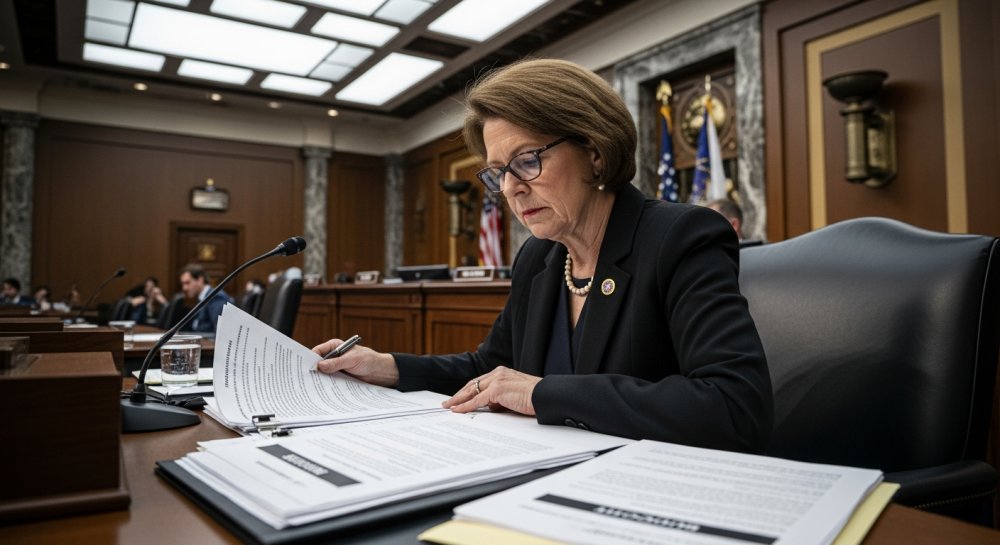
The United States Senate has always been home to a select few legislators who command genuine respect across party lines and possess the institutional knowledge to navigate complex legislation. Maine’s Senator Susan Collins stands among this rare group, wielding unique authority as Chair of the Senate Appropriations Committee and member of the Select Committee on Intelligence.
Collins has earned her position through an unmatched record of dedication. She holds the distinction of being the first senator in American history to cast 10,000 consecutive roll call votes without missing a single one — a streak that began in 1997 and continues to grow. Her reputation as a Senate “workhorse” reflects decades of substantive legislative achievement.
Now, as America faces mounting threats from Iran and China’s aggressive expansion under Xi Jinping, Collins finds herself at the center of perhaps her most critical challenge yet: securing adequate funding for military modernization while navigating an unprecedented era of partisan warfare in Washington.
The urgency of this moment cannot be overstated. America’s military requires substantial investment in next-generation technology, from advanced submarines and B-21 bombers to cutting-edge cyber capabilities. The rapid evolution of warfare demands continuous adaptation and funding — yet the political environment threatens to derail these essential preparations.
In partnership with Senate Armed Services Committee Chairman Roger Wicker (R-MS), Collins must guide the Pentagon’s budget through a minefield of partisan obstruction. The Constitution’s mandate to “provide for the common defense” has never faced such coordinated political resistance from within our own government.
The Democrat strategy has become clear: obstruct defense spending through any means necessary. Senate Minority Leader Chuck Schumer, pressured by his party’s radical wing, appears determined to force a government shutdown before the midterm elections. This isn’t speculation — it’s the logical outcome of how Democrats have positioned themselves for the fall campaign.
Making Collins’ task even more difficult, Maine Democrats nominated Graham Platner — a self-described “communist” who represents the extreme fringe of the party’s hard-left faction. This nomination appears designed specifically to remove one of the Senate’s most effective members during a moment when her expertise is most needed for national security.
The contrast could not be starker. Where Collins brings decades of achievement and bipartisan respect, Platner offers radical ideology and destructive rhetoric. Democrats are essentially asking Maine voters to sacrifice their state’s considerable influence in Congress to advance an anti-American, anti-West agenda.
The practical challenge facing Collins and Senate leadership is how to fund the Pentagon when normal legislative processes — hearings, markups, conference committees — will be blocked by Democrat obstruction tactics. The ideal of “regular order” appears doomed for this cycle.
This reality has forced serious Republican senators to consider an unconventional path: using budget reconciliation to advance defense spending for multiple years. While nobody prefers this approach, the alternative is allowing America’s military readiness to deteriorate through a series of short-term continuing resolutions that prevent long-term planning and procurement.
Budget reconciliation has been used before for major legislation, including COVID relief packages under both parties. Collins herself helped craft the critical Paycheck Protection Program as part of the March 2020 CARES Act. The process is complicated and controversial, but it may be the only viable path to ensuring military preparedness.
The question now is whether to use reconciliation for two or three years of defense funding rather than just one. This would acknowledge the deep divide between mainstream American support for strong national defense and the hard left’s “defund defense” position that mirrors their calls to defund police and ICE.
Forward-funding up to $5 trillion for defense through reconciliation represents a departure from normal procedures. However, it may be the necessary choice to protect our troops and maintain military readiness until the Democrats’ ideological fever breaks.
The stakes extend beyond this budget cycle. If Democrats recapture either chamber of Congress in the fall elections, they have signaled their intention to slash defense spending dramatically in favor of socialist programs. Even a handful of radical House members or one or two extreme senators could control spending decisions in a closely divided Congress.
The Democrat Party has traveled further left than any major American political party in history. Their opposition to American power and global leadership is no longer subtext — it’s explicit policy. Recent Democrat nominees in New Jersey and New York have joined the existing “Squad” in promoting positions that would fundamentally weaken America’s military strength.
This transformation of the Democrat Party from a mainstream institution to a vehicle for far-left ideology has created a national security crisis. When one of America’s two major parties actively works against military preparedness, serious legislators like Collins must find new paths to fulfill their constitutional duties.
Collins faces this challenge while also navigating an election year in her home state. The Democrat strategy of nominating an extremist opponent appears calculated to distract her from critical national security work and eliminate a key voice for responsible governance.
Fortunately for America, Collins has demonstrated throughout her career an ability to focus on substance over politics. Working alongside Wicker, Senate Majority Leader John Thune, Budget Chairman Lindsey Graham, and Intelligence Chairman Tom Cotton, she will need to draw on all her accumulated experience and bipartisan relationships.
The Pentagon must be equipped to address immediate threats while preparing for future challenges. This requires stable, long-term funding commitments — not the chaos of shutdown politics and short-term patches. The military cannot afford to lurch from crisis to crisis while China and Iran advance their capabilities.
The choice before the Senate is difficult but clear. Either Republican leadership acts decisively using available legislative tools to secure defense funding, or America’s military readiness will be held hostage to Democrat political theater. There is no middle ground when one party has abandoned its responsibility to provide for the common defense.
Collins’ leadership in this moment reflects the best traditions of the Senate as an institution. While partisan voices seek headlines and confrontation, she focuses on the unglamorous work of ensuring America remains secure. Her decade-long perfect voting record demonstrates a commitment to duty that stands in stark contrast to the performative politics that dominate too much of Washington.
The coming months will test whether serious legislators can still accomplish essential work in an era of hyper-partisanship. The answer to that question will have profound implications not just for this budget cycle, but for America’s security posture in an increasingly dangerous world.
Let us know what you think, please share your thoughts in the comments below.

Donella Wood
June 30, 2026 at 10:25 am
Collins is a legislator, Planter(sp) is a bad joke!