Finance
SEC Pushes Bold Overhaul to Boost Public Listings

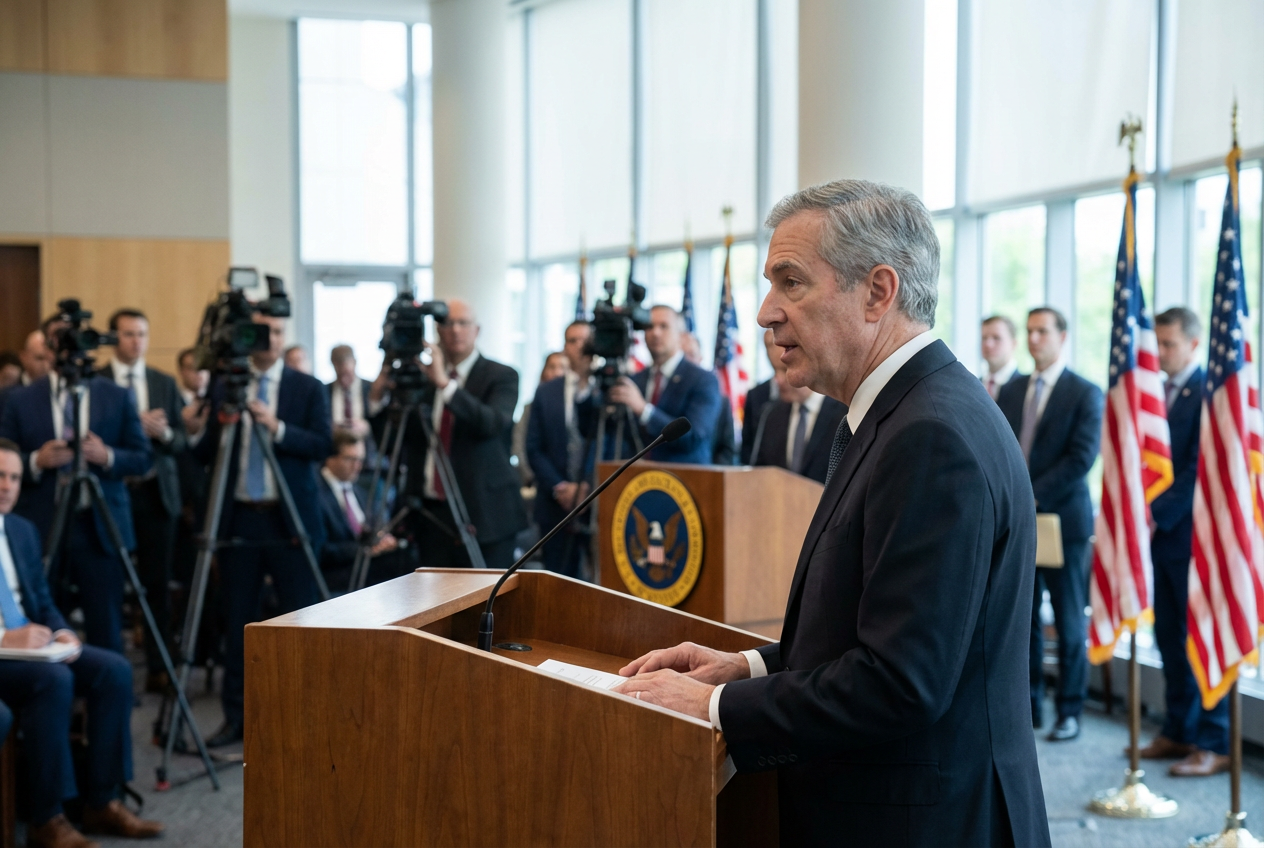
Clear Facts
- SEC Chairman Paul Atkins is implementing a mandate to increase public company listings.
- The agency is exploring a shift from quarterly to semi-annual reporting requirements.
- Plans include creating tailored regulatory frameworks for small and mid-sized businesses.
Chairman Paul Atkins is focusing on revitalizing American capital markets by reducing burdensome regulations that discourage companies from going public. He notes that the number of public companies has dwindled to half of what existed four decades ago.
Atkins plans to fulfill President Trump’s mandate to incentivize initial public offerings through significant deregulatory efforts. The SEC is currently reviewing whether to reduce the frequency of mandatory financial reports to provide companies more flexibility.
“We have half as many public companies as we did 40 years ago,” Atkins stated.
“The reason why we have a diminishing number of public companies is that as you have mergers and bankruptcies, you don’t have newbies coming in and your population will dwindle.”
The shift aims to move away from costly compliance cycles that often force businesses to prioritize short-term quarterly gains over long-term stability. Historically, the SEC only required annual reports at its founding, with quarterly standards not appearing until 1970.
“We need to shake things up,” Atkins added. “So I’m pushing my team harder and we can go faster.”
Atkins emphasizes a return to the agency’s core mission of protecting investors and facilitating capital formation. This includes abandoning costly climate-related disclosure rules and ending the practice of regulation by enforcement.
“I believe that our capital markets must continue to reflect our national character,” Atkins said.
“They must continue to lead the world in their depth, in their dynamism, and in their capacity to translate ingenuity into prosperity.”
The chairman is also collaborating with the CFTC to provide clear jurisdictional boundaries, particularly regarding digital assets. This cooperation seeks to prevent financial innovation from moving offshore due to regulatory confusion.
Let us know what you think, please share your thoughts in the comments below.
