Crime
Portland Protester Gets 30 Months for What He Did to Federal Officer’s Face

Clear Facts
- Robert Jacob Hoopes was sentenced to 30 months in federal prison for throwing a rock that struck an ICE officer in the face during a June 2025 protest in Portland, Oregon
- The officer suffered significant facial injury with heavy bleeding and vision obstruction, requiring medical treatment beyond basic first aid
- FBI investigators used facial recognition technology to identify Hoopes, matching a tattoo visible in protest photos to images from a Reed College event page
- Hoopes must also pay more than $8,000 in restitution and serve three years of supervised release
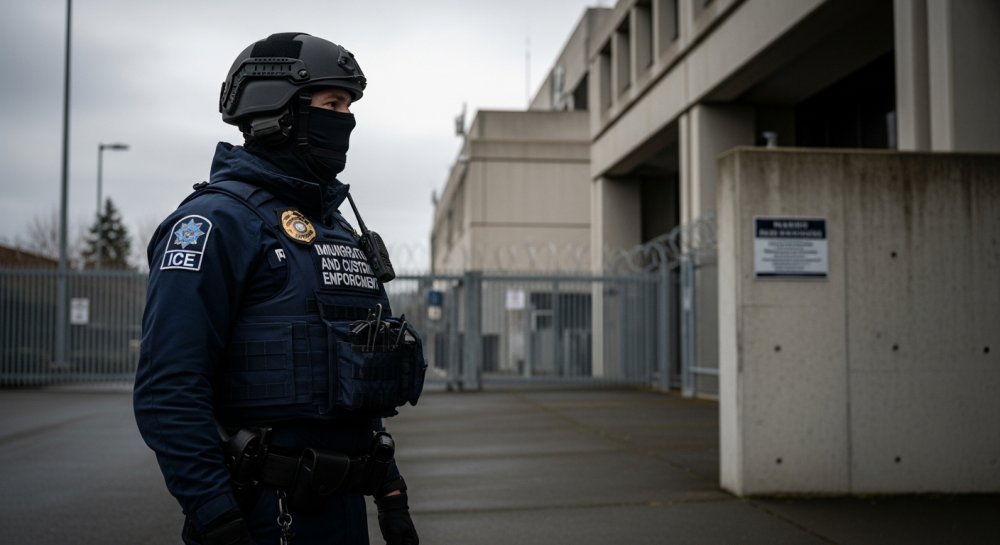
A Portland man who admitted to assaulting a federal immigration officer during violent protests last year learned his fate Thursday — 30 months behind bars for a rock-throwing attack that left the officer bleeding and unable to see.
Robert Jacob Hoopes previously pleaded guilty to aggravated assault of a federal employee with a dangerous weapon. The charge stems from a June 2025 incident outside a U.S. Immigration and Customs Enforcement facility in Portland, where anti-ICE demonstrators clashed with law enforcement.
According to court documents, Hoopes threw a rock during the protest that struck an ICE Enforcement and Removal Operations officer directly in the face, causing what prosecutors described as “significant injury.” The officer’s wound bled heavily and obstructed his vision, requiring medical treatment beyond basic first aid.
U.S. Attorney for the District of Oregon Scott Bradford delivered a clear message with the sentencing.
“Today’s message is clear — violence is not a protest. When you cross the line and assault a federal officer, you will be prosecuted.”
In addition to the prison term, Hoopes was ordered to serve three years of supervised release and pay more than $8,000 in restitution to cover the officer’s medical expenses and related costs.
The case demonstrates how modern law enforcement tools are being deployed to hold violent protesters accountable. FBI investigators identified Hoopes using facial recognition technology, submitting a photograph published by OregonLive.com into commercially available software.
The software generated approximately 30 potential matches from publicly available databases. Investigators then reviewed the results and identified a photograph on a Reed College SmugMug page titled “Canyon Day April ’23.”
Prosecutors said a distinctive tattoo visible on the individual’s forearm in the college photo matched a tattoo seen on the suspect during the June 14 protest. That match, combined with facial recognition data, provided investigators with the breakthrough they needed.
The case took an ironic twist when Hoopes’ father, Tom Hoopes, defended his son in an interview with KATU. He described Robert as a “lifelong Quaker who is deeply committed to pacifism” — a characterization that stands in stark contrast to the violent assault his son admitted committing.
While the elder Hoopes acknowledged his son attended the protest, he declined to discuss his specific involvement.
“What his involvement was: I can’t speak to that, but he is deeply committed to justice.”
The Justice Department has pursued cases against numerous individuals accused of assaulting federal officers during protests tied to President Donald Trump’s immigration enforcement policies. The administration has made clear that attacks on federal law enforcement will not be tolerated, regardless of the political motivations behind them.
More recently, clashes between demonstrators and law enforcement outside Delaney Hall, an immigration detention center in Newark, New Jersey, have resulted in dozens of arrests. Federal authorities continue to investigate violent incidents at ICE facilities across the country as the Trump administration works to restore order to America’s immigration system.
The 30-month sentence sends a strong signal that federal courts will impose serious consequences for those who use violence against officers simply doing their jobs to enforce the nation’s immigration laws.
Let us know what you think, please share your thoughts in the comments below.

mountainman
June 12, 2026 at 6:57 am
About time somebody was held accountable for their actions
Robert
June 12, 2026 at 8:20 am
I am so happy that people are starting to pay for their actions. It has been getting crazy and so hard for all our agents and police and they have been taken advantage of for so long. Im sure this will upser the Dems just like voter ID. I hope all this trash gets cought.
John F Gragowski
June 12, 2026 at 8:48 am
It’s a start!
Phil Miller
June 12, 2026 at 9:09 am
A-a-a-amen!
Francis
June 12, 2026 at 12:50 pm
He deserves more jail time
royce
June 13, 2026 at 12:57 am
30 months for a rock hitting law enforcement in the face and was having to be sent to the hospital for medical attention? what if that was a bullet that bounced off a metal rail of some type and did the same damage, what would this idiot judge sentence be then because i do not see the difference from being hurt by a rock or a piece of wood or snow ball.