U.S. News
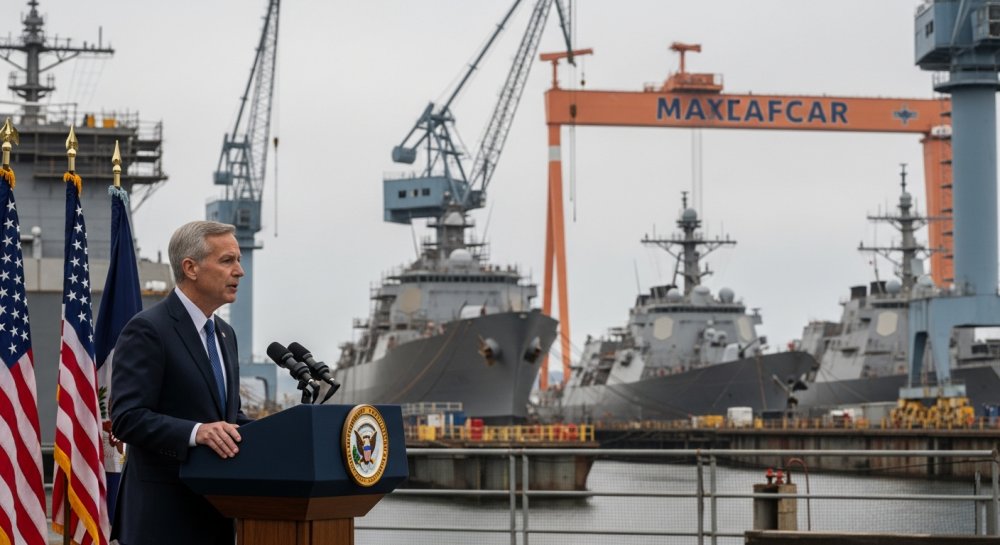
Trump Announces Emergency Navy Funding to Counter China’s Maritime Threat

Clear Facts
- President Trump announced a $65 billion emergency shipbuilding fund to counter China’s naval expansion
- The initiative includes $25 billion in grants and $40 billion in low-cost financing for American shipyards
- China currently operates the world’s largest navy with over 370 ships compared to America’s approximately 300 vessels
President Donald Trump unveiled a sweeping $65 billion emergency funding package designed to revitalize American shipbuilding and counter China’s rapidly expanding naval capabilities. The announcement signals a major shift in U.S. maritime strategy as the nation confronts an unprecedented challenge to its naval supremacy.
The comprehensive plan allocates $25 billion in direct grants and $40 billion in low-cost financing to American shipyards. This investment aims to rebuild the domestic shipbuilding infrastructure that has eroded over decades of outsourcing and foreign competition.
“We face a national security emergency in our shipbuilding capacity,” Trump stated during the announcement.
The initiative comes as China has surpassed the United States in total naval vessel count, operating more than 370 ships while the U.S. Navy maintains approximately 300. China’s People’s Liberation Army Navy has achieved this expansion through aggressive state-sponsored shipbuilding programs that American officials view as a direct threat to freedom of navigation and regional stability.
Navy leadership has expressed concern for years about America’s declining shipyard capacity and the growing gap with China’s industrial output. Chinese shipyards can produce vessels at a pace and cost that American facilities currently cannot match, creating strategic vulnerabilities for U.S. naval operations in the Pacific and beyond.
The emergency funding package specifically targets modernizing aging shipyard facilities, expanding production capacity, and training a new generation of skilled maritime workers. Defense analysts note that rebuilding America’s shipbuilding base will take years, but this investment represents a crucial first step toward restoring American naval dominance.
Traditional security hawks have long advocated for increased naval investment, arguing that maritime superiority remains essential to protecting American interests and maintaining global stability. The Pacific theater, where China has grown increasingly assertive, demands a capable naval presence that can respond to potential threats and support allied nations.
The plan also addresses supply chain vulnerabilities that have plagued American defense manufacturing. By strengthening domestic production capabilities, the initiative reduces dependence on foreign suppliers and ensures that critical naval assets can be built, maintained, and upgraded on American soil.
Industry experts view the announcement as validation of warnings about China’s naval buildup and America’s industrial decline. The funding represents one of the largest peacetime investments in shipbuilding infrastructure in modern American history.
Beyond the immediate naval applications, the investment promises to create thousands of high-paying manufacturing jobs in coastal communities that have suffered from the decline of American shipbuilding. These positions will require specialized skills and offer stable careers in an industry critical to national defense.
The emergency designation allows for expedited implementation, bypassing some of the bureaucratic delays that typically slow major defense infrastructure projects. Shipyards will be able to access funding more quickly and begin expansion and modernization efforts without extended waiting periods.
China’s shipbuilding dominance extends beyond military vessels to include commercial shipping, where Chinese yards produce the majority of the world’s cargo ships and tankers. This industrial capacity gives Beijing significant economic and strategic advantages that American policymakers are now working to counter.
Defense officials have emphasized that the investment will focus on building ships designed for 21st-century threats, including advanced surface combatants, submarines, and support vessels equipped with cutting-edge technology. The goal is not simply to match China’s numbers but to maintain qualitative superiority through innovation and capability.
Let us know what you think, please share your thoughts in the comments below.
