Entertainment
Library of Congress Uncovers Lost 1897 Film Featuring Cinema’s First Robot

Clear Facts
- Library of Congress curators discovered a lost 1897 film by French cinema pioneer Georges Méliès titled “Gugusse and the Automaton”
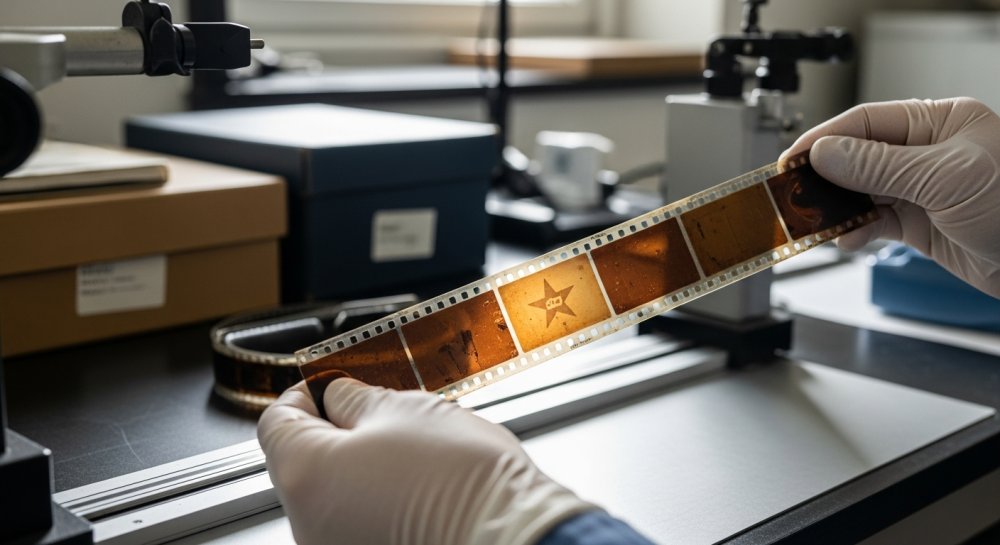
- The film features one of cinema’s earliest robot depictions and was identified by a subtle star symbol painted on a prop, matching Méliès’ Star Film production company
- The reel was donated by a Michigan family who preserved it for decades in basements, barns, and garages before sending it to the Library of Congress
What began as a routine day for Library of Congress librarians turned into a major discovery when they uncovered a lost 1897 film featuring one of cinema’s earliest robots. The film, called “Gugusse and the Automaton,” was made by legendary French filmmaker Georges Méliès in 1897.
Méliès was a pioneer of special effects and directed the famous 1902 film “A Trip to the Moon.” The newly discovered film shows a magician battling a mischievous automaton in a brief slapstick sequence.
The Library of Congress described the film as “the first appearance of what might be called a robot.” It was uncovered by librarians who had been examining a collection of deteriorating film reels.
They identified the film in September, though officials kept the discovery under wraps until late February. “It had not been seen by anyone in likely more than a century,” the release said.
The curators didn’t immediately know what they were looking at, said Jason Evans Groth, a curator of the Moving Image Section at the Library of Congress National Audio-Visual Conservation Center in Culpeper, Virginia. Groth told reporters that the team noticed a “subtle clue” in a frame that made them wonder if it was a Méliès film.
“After looking closely at the film on their inspection table, they saw a star painted on one of the props,” he said.
“Knowing that Méliès’ film production company was called Star Film, and that he often used that iconography in his movies, they contacted a colleague who is a Méliès expert with a photo of the frame,” Groth said.
The colleague responded, “Congratulations! You’ve discovered a lost Méliès!”
Groth added, “They also identified the title for us — which cinema and Méliès historians knew had existed, but which had been lost for decades.”
The reel was sent to the Library of Congress by Bill McFarland, a Michigan man whose family had preserved the films for decades, storing them in basements, barns and garages. Groth described the film as a “copy of a copy of a copy,” indicating it had likely been widely duplicated and shared.
“We don’t know exactly how [McFarland’s great-grandfather] William DeLyle Frisbee got this one, or if it was one of his favorites, but having a French magic trick film to show to folks in Pennsylvania — especially one with a robot! — must have been something to see,” he said.
For those unfamiliar with Méliès’ work, Groth said his influence spans from the earliest days of filmmaking to the 2011 Martin Scorsese film “Hugo,” in which he is portrayed as a character. Méliès “made hundreds of movies, and rather than just documenting what he was seeing, he managed to weave imaginative stories into the shorts he created, conjuring atmospheres and moods that were rooted in fantasy, early science fiction and illusion,” said Groth.
“He created new worlds and mystified audiences, leaning on narrative storytelling to capture the audience’s minds and imaginations rather than just showing them the world on screen.”
Groth noted that a “very large percentage” of early silent films have been lost to history — making the discovery particularly special. “Luckily, more and more presumed lost films are coming to light,” he said.
“Some are buried in larger collections,” he said. “Some are, like in this case, passed down from generation to generation but are not able to easily be projected and, thus, sit fallow until they get into the right hands.”
Let us know what you think, please share your thoughts in the comments below.
