World News
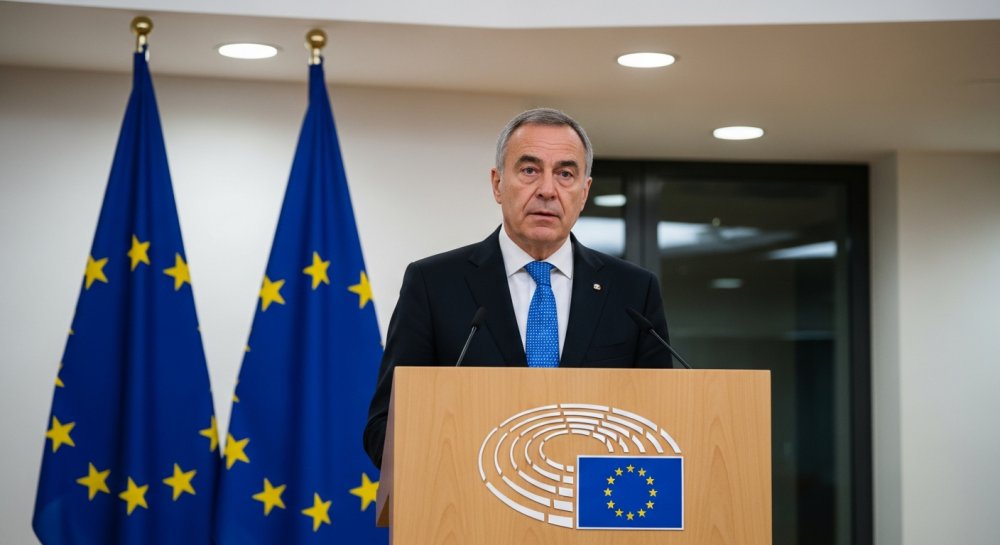
EU Leader Exploits Middle East Crisis to Push Green Energy Agenda

Clear Facts
- European Union President Ursula von der Leyen claimed the U.S.-Iran conflict justifies accelerating the EU’s decarbonization plans
- President Trump announced a blockade of the Strait of Hormuz to ships paying Iran passage tolls
- The EU is using energy security concerns to advance its climate agenda amid international tensions
European Union President Ursula von der Leyen seized on escalating tensions between the United States and Iran to justify the EU’s controversial decarbonization agenda. In comments made Monday, von der Leyen argued that the current conflict “confirmed” the necessity of moving forward with plans to eliminate carbon-based energy across the continent.
The remarks came after President Donald Trump announced early Sunday that the Strait of Hormuz would be closed to any vessels paying Iran a toll for passage through the critical maritime chokepoint. The strategic waterway handles roughly one-fifth of global oil shipments, making it one of the world’s most important energy corridors.
Von der Leyen’s attempt to leverage an international security crisis to advance climate policy has raised eyebrows among those who view energy independence as requiring a diverse portfolio including traditional fossil fuels. Critics argue that the EU’s rush to eliminate carbon-based energy sources leaves the continent vulnerable to energy shortages and dependent on unreliable renewable sources.
The blockade announcement represents a significant escalation in U.S.-Iran relations, with direct implications for global energy markets. Rather than focusing on immediate security concerns or ensuring stable energy supplies during a potential crisis, the EU leadership appears determined to use the situation as political leverage for its green energy transformation.
The timing of von der Leyen’s comments has prompted questions about the EU’s priorities during a period of international instability. While American forces work to counter Iranian aggression and protect vital shipping lanes, European leadership is doubling down on policies that could leave the continent more energy-dependent and economically vulnerable.
Energy analysts have long warned that rapid decarbonization without reliable alternative energy infrastructure in place could leave Europe exposed to supply disruptions and price volatility. The current Middle East crisis only underscores these concerns, yet EU leadership appears undeterred in its ideological commitment to eliminating fossil fuels.
Let us know what you think, please share your thoughts in the comments below.
