Science & Tech
Autonomous Excavators Work Job Sites With Empty Cabs

Clear Facts
- Bedrock Robotics has deployed autonomous excavators on active commercial construction sites in Texas and Nevada with no operator inside the cab.
- The machines are performing real earthmoving work on infrastructure projects including water treatment facilities and multi-million-cubic-yard site preparation.
- Bedrock reports near human-level productivity after two years of operation and says human intervention is relatively rare.
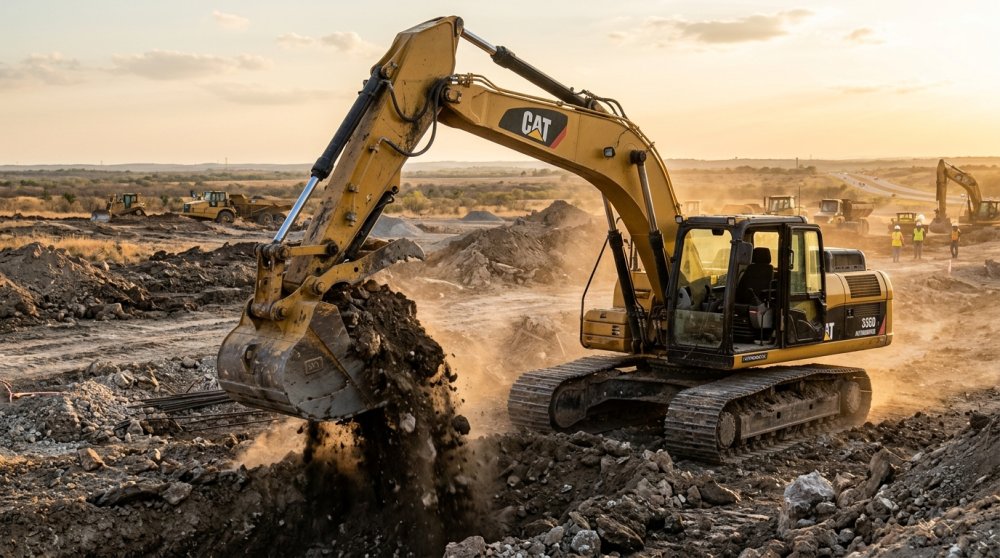
Construction sites in Texas and Nevada are running heavy equipment with no one in the operator seat. San Francisco-based Bedrock Robotics is deploying autonomous excavators on live commercial projects.
The company completed a year of supervised testing before moving to these operator-free deployments. The machines are now working on major infrastructure jobs without an operator present.
Bedrock has machines active on a Nevada water treatment facility with Sundt Construction. In Texas, the company is partnered with Champion Site Prep on a large earthwork project and with Zachry Construction Corporation on a 1.2 million-cubic-yard civil sitework job.
These deployments focus on early-stage earthmoving, cut-and-fill operations, and rough cuts. Bedrock measures productivity in cubic yards of earth moved per shift.
A company spokesperson stated, “As of our deployments in August 2026, two years after the company was founded, we are already near human-level productivity.”
Bedrock designed its system as a retrofit for existing equipment. Crews can install the sensor and computing package in a day without permanent modifications. Once a site manager sets the initial plan, the software handles the digging work.
The system was trained on tens of thousands of hours of field work. Bedrock is currently deploying machines it outfitted and tested at its own facilities. The company has not provided a timeline for retrofitting contractors’ existing equipment.
Safety remains the top priority. The machines monitor their own progress and can call for help if they encounter problems. A Bedrock spokesperson told CyberGuy, “It’s relatively rare” for a person to need to step in.
The system includes automatic safety responses. “If a person or unauthorized object gets too close to a Bedrock-equipped machine, the machine will automatically stop,” the spokesperson said.
Bedrock estimates excavators represent about 25% of a typical contractor’s fleet. The company notes that operators may need five years or more to fully develop their skills, creating staffing challenges for repetitive earthmoving work.
Bedrock says it does not expect operators to be replaced. The company sees autonomous machines working alongside existing crews in the near term. Over the longer term, experienced operators could move into supervisory roles overseeing autonomous equipment.
Bedrock has raised more than $350 million. Its founding team includes former Waymo engineers. The company cites industry estimates showing that roughly one in five construction workers is over age 55 and more than 40% of the workforce could retire within five years.
Bedrock co-founder Kevin Peterson described a future where multiple machines coordinate across job sites. An excavator could work alongside a bulldozer, truck, and grader under unified software direction.
Construction delays affect housing, roads, and water infrastructure. If autonomous equipment can maintain earthwork progress despite operator shortages, some projects could stay closer to schedule.
Skilled workers remain essential for planning, detailed work, and managing situations the technology cannot handle independently.
Let us know what you think, please share your thoughts in the comments below.
