U.S. News
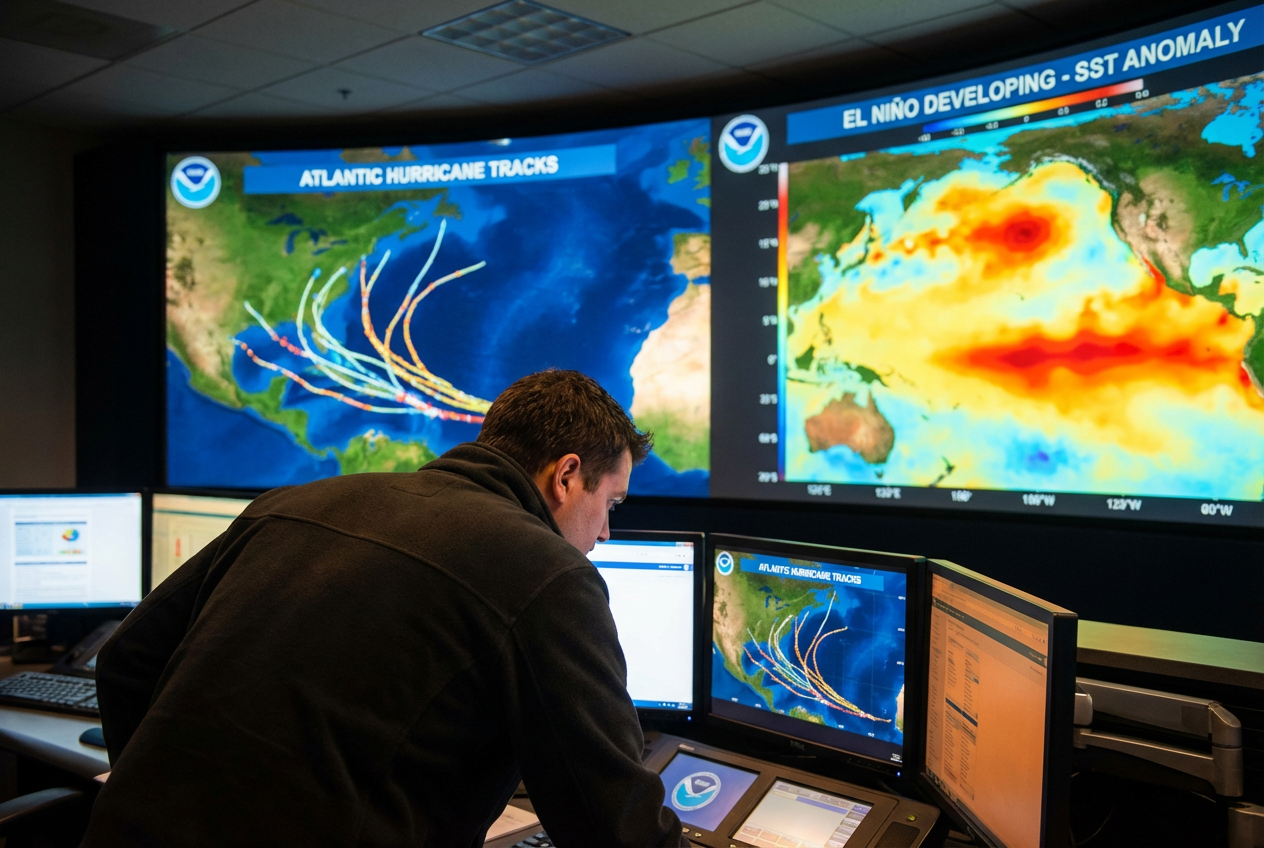
El Niño Likely to Calm 2026 Hurricane Activity

Clear Facts
- The National Oceanic and Atmospheric Administration (NOAA) expects an El Niño pattern to develop during the middle of the 2026 Atlantic hurricane season.
- El Niño typically reduces hurricane and tropical storm formation in the Atlantic.
- Current forecasts give a 50–60% chance that El Niño will emerge as hurricane season peaks.
NOAA predicts a shift to El Niño during the height of the 2026 hurricane season, a development known to suppress hurricane activity in the Atlantic.
This natural climate cycle, caused by Pacific Ocean temperature changes, influences weather patterns worldwide.
“El Niño usually generates winds that disrupt tropical cyclone formation in the Atlantic Ocean.”
Recent winters featured a persistently cool La Niña, which brought heavy snowfall and repeated cold spells to the eastern U.S.
Meteorologists note that La Niña periods, which typically average about 14 named storms and seven hurricanes, are more active, while El Niño years usually bring about 10 named storms and five hurricanes.
“Nothing ever is a guarantee with weather.”
The switch to El Niño is supported by increasing neutral conditions in the Pacific, with long-range forecasts aligned for a summer or early fall event.
Aggressive westerly winds from El Niño often create a more stable Atlantic atmosphere, making it harder for tropical systems to develop.
“Warmer waters in the Pacific Ocean and increased rising air associated with El Niño produce aggressive westerly winds that shear through the Caribbean and Main Development Region (MDR).”
Exceptionally warm Atlantic waters could partially offset El Niño’s usual suppression of hurricanes, according to some forecasts.
Last year, a weak La Niña led to no hurricanes making U.S. landfall, though three major storms formed, including Hurricane Melissa which caused significant damage in Jamaica.
While long-term patterns can guide expectations, the specific outcomes of storm seasons always depend on daily atmospheric trends.
Wondering what this means for your area? Stay informed and be prepared as the 2026 season approaches.
Let us know what you think, please share your thoughts in the comments below.
