World News
European Leaders Float Symbolic Post-Conflict Plan While America Does Heavy Lifting

Clear Facts
- British PM Keir Starmer and French President Emmanuel Macron are planning a European-led naval mission to reopen the Strait of Hormuz only after hostilities end
- The proposal would exclude U.S. forces and involve “non-belligerent” countries in a strictly defensive role
- President Trump has deployed U.S. Navy carrier strike groups to blockade Iranian ports and actively secure the strategic waterway
- Critics argue the European plan is largely symbolic given the degraded state of British and French naval capabilities
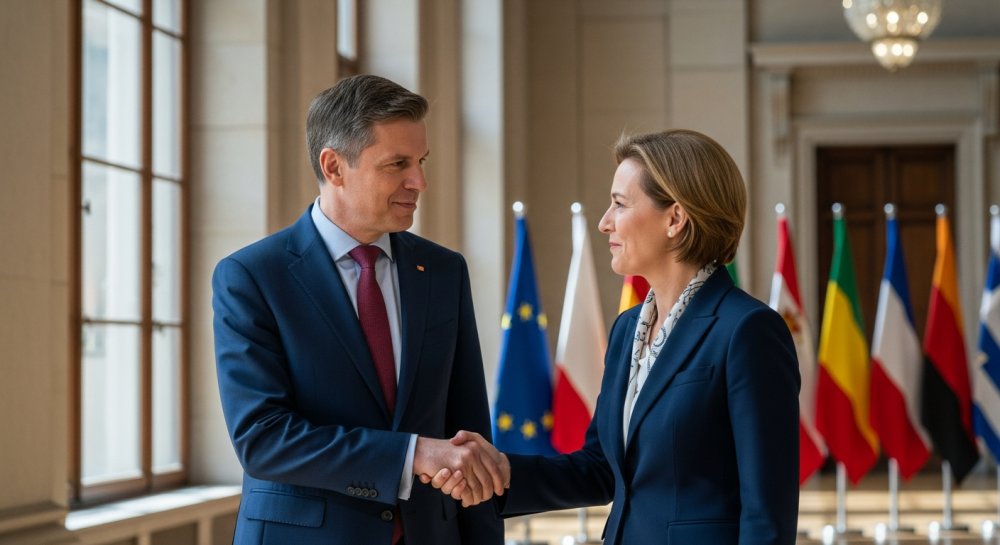
As British Prime Minister Keir Starmer and French President Emmanuel Macron convene a summit Friday on the future of the Strait of Hormuz, the two leaders are pushing a European-led plan to reopen the vital shipping lane after the war, without U.S. leadership. The proposal comes as President Donald Trump takes decisive action with American naval power to secure the strategic waterway now.
The Anglo-French initiative envisions a post-conflict naval mission made up of Britain, France and other “non-belligerent” countries that would deploy only after fighting ends. Unlike President Trump’s current strategy of blockading Iranian ports with U.S. naval power, the European initiative is intended to be separate from the warring parties and focused on restoring commercial shipping.
A senior European official insisted the initiative is not meant to go around Washington, claiming Paris began discussing a future maritime mission “from day one” of the conflict and is now formalizing those plans jointly with London. The official told a news outlet that the U.S. has been kept informed, even though Washington was not part of earlier talks involving more than 40 nations.
Macron and Starmer are expected to host a summit to advance what both governments describe as a “coordinated, independent, multinational plan” to reopen the Strait of Hormuz once the fighting ends.
“France and the United Kingdom will also host a conference in Paris this Friday, bringing together by video conference non-belligerent countries ready to contribute, alongside us, to a multilateral and purely defensive mission aimed at restoring freedom of navigation in the strait when security conditions allow,” Macron wrote on X.
Starmer similarly described the effort as a “coordinated, independent, multinational plan to safeguard international shipping when the conflict ends,” though critics question what Britain can realistically contribute given the Royal Navy’s diminished capabilities.
The European senior official said the proposed force would be “strictly defensive” and would only deploy after active fighting and bombardment have ended, with the goal of restoring normal shipping rather than enforcing a wartime corridor. The official stressed that Iran remains “the first problem.”
“What we want in the end is no blockade, no toll, no nothing that blocks the fluidity of what is going through the Strait of Hormuz,” the official said, while acknowledging extensive coordination with Washington even if the emerging mission is currently limited to “non-belligerent” countries.
Macron has repeatedly emphasized that France’s envisioned mission would be “strictly defensive” and ruled out escorting ships while “bombings” are ongoing. French Foreign Minister Jean-Noël Barrot said “several dozen countries” already had participated in preparatory discussions led by military chiefs of staff, and that any future mission would also require coordination with Gulf coastal states.
The Anglo-French initiative comes as President Trump has taken a far more aggressive approach, ordering the U.S. Navy to blockade Iranian ports and continue operations aimed at securing the strategic waterway after ceasefire talks between the U.S. and Iran collapsed in Pakistan. The contrast between American action and European planning could not be more stark.
Critics argue that without American military power, the European proposal risks being largely symbolic. The reality is that Britain and France lack the naval capabilities to secure such a vital waterway on their own.
The Henry Jackson Society analyst Barak Seener said Britain and France are overstating what they can realistically achieve.
“Britain and France are playing at being relevant as so-called ‘Middle Powers’ in international affairs.”
“Keir Starmer’s assertion ‘We’re not getting dragged into the war’ disguises the embarrassing fact that the Royal Navy is facing a hollowed out crisis, causing the initiative to be ‘strictly defensive’.”
“France’s navy is also facing structural and budgetary pressures that strain its ability to conduct high-tempo operations.”
Seener’s assessment cuts to the heart of the matter: European forces simply lack the capacity for meaningful action.
“It is laughable that a European coalition of ‘non-belligerent’ countries that are only willing to engage once hostilities have ended can even speak of protecting its shipping lanes.”
“Ultimately, the U.S.’s deployment of hard power, consisting of carrier strike groups and fighter aircraft to blockade Iranian ports and clear mines from the Strait of Hormuz, can protect shipping lanes.”
The contrast is clear: while President Trump deploys American naval might to secure a critical chokepoint for global commerce right now, European leaders plan conferences about what they might do later, if conditions allow. The U.K. government and the White House did not respond to requests for comment before publication.
Let us know what you think, please share your thoughts in the comments below.
