U.S. News
Supreme Court Blocks Trump IEEPA Tariff Move

Clear Facts
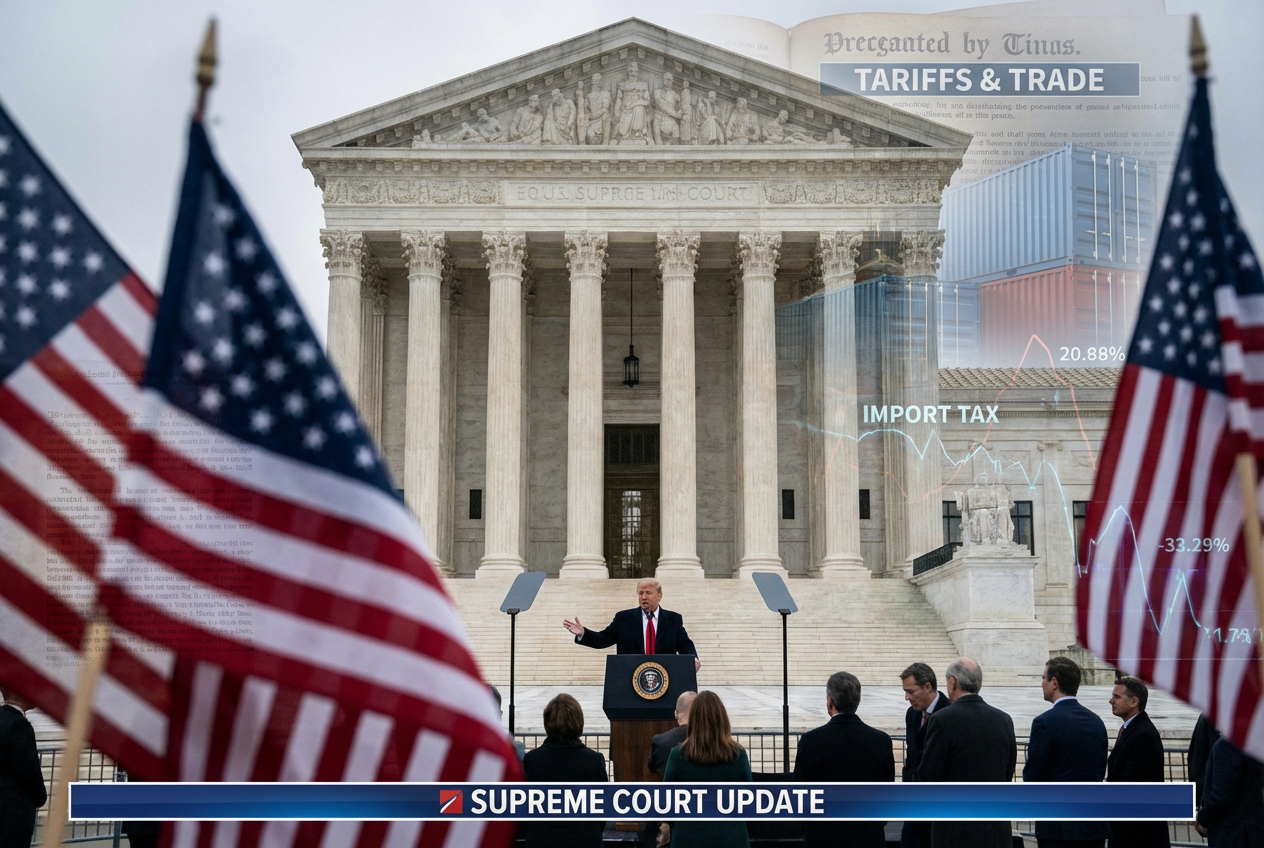
- The Supreme Court ruled 6-3 that President Trump cannot use the International Emergency Economic Powers Act (IEEPA) to impose tariffs without Congress’s approval.
- Professor Jonathan Turley said the decision was expected due to the Court’s strict reading of the law and conservative approach to statutory interpretation.
- Tariffs remain in place through other legal means and the administration had anticipated the outcome, preparing accordingly.
The Supreme Court decided that the language “regulate importation” in IEEPA does not cover the power to impose tariffs. It requires clear authority from Congress.
Jonathan Turley, a notable law professor, explained that even with vigorous arguments, the administration faced an uphill legal battle.
“The odds were against the president in this appeal. Some of these conservative justices historically take a more textual approach to statutes. They did not see the clear authority under IEEPA, and there were good faith arguments on both sides,” Turley said.
He noted the solicitor general did an excellent job arguing the case but could not sway the Court.
“I actually thought the solicitor general of the United States did an extraordinary job in oral argument. I thought that he was marvelous and it ultimately didn’t carry the day, but that’s what most of us thought would be the outcome,” Turley added.
Turley stressed that tariffs are not being eliminated. He said strategic use of tariffs as foreign policy tools will continue.
“I expect the administration was well prepared for this. It’s not a welcomed result, but it’s not an unanticipated result. The key is that this doesn’t mean the checks in the mail, as you noted for refunds,” Turley said.
He also pointed out the administration’s ability to negotiate favorable trade agreements. He mentioned a new U.S.-Indonesia trade deal that reduced tariffs to 19% from 32%.
“He’s also used it to secure a series of favorable trade deals, including one just in the last 24 hours with Indonesia, and I don’t think that is going to change either. And so there are aspects of the result here that the president can take some solace in,” Turley stated.
The president launched tariffs on several countries, linking them to U.S. security and economic concerns. The Supreme Court’s decision does not reverse those existing policies.
The case had traveled through multiple courts, with the Supreme Court agreeing to hear it after lower courts blocked the policy.
The effect of the ruling does not end the tariff strategy. It clarifies the legal routes a president must follow.
Let us know what you think, please share your thoughts in the comments below.
