World News
What America’s Iran Blockade Just Revealed About Our Naval Dominance

Clear Facts
- U.S. forces have turned back, boarded, or seized 39 vessels attempting to reach Iran since April 13
- The operation has seized Iranian oil tankers carrying 1.9 million barrels worth $171 million, now sailing to U.S. control
- This marks the largest capture of enemy vessels since President Franklin D. Roosevelt requisitioned 90 foreign ships in 1941
On Tuesday, U.S. Marines from the USS Tripoli fast-roped from their MH-60 Seahawk helicopters onto the deck of a suspicious container ship named Blue Star III heading for Iran. That makes a total of 39 vessels turned back, boarded or seized since April 13.
“The blockade has been unbelievably effective,” President Donald Trump said on Sunday. Economic pressure is the main point of the blockade, but it has military impact far beyond the Strait of Hormuz.
“We seized their sanctioned ships, and we will seize more,” U.S. Secretary of War Pete Hegseth briefed at the Pentagon on Friday, April 24.
“Our blockade is growing and going global,” Hegseth added.
“Going global” is sending shockwaves through China. China imports at least 70% of its oil, and of that, 90% moves by sea. Iran alone supplied 14% of China’s imports last year, with Russia adding another 18%. Most of that oil was moved by shadow fleet tankers.
For all the talk of China’s growing naval power, this sea power phase of Operation Epic Fury is an incredible boost to deterrence in the Pacific. The tactics and joint force coordination on display are not something China can easily match. The web of air and maritime surveillance, intelligence, financial forensics and sheer audacity is something only America can pull off.
Here’s why China and Russia should be very, very worried.
The drama began in the wee hours of Sunday, April 19, when the Iranian-flagged container ship Merchant Vessel (M/V) Touska tried to enter the Strait of Hormuz and reach the Iranian port of Bandar Abbas. Touska was pedal-to-the-metal in merchant ship terms, steaming at 17 knots under cover of darkness. Lying in wait was the U.S. Navy guided-missile destroyer USS Spruance (DDG 111.)
Spruance had already caught a different Iranian ship sneaking out of the strait five days earlier and Touska was highly visible. At 9 a.m., after multiple warnings, Spruance fired nine inert 5-inch shells into the engine room, leaving Touska dead in the water. Now that’s marksmanship. At 4 p.m., U.S. Marines from the amphibious ship USS Tripoli air-assaulted onto Touska and took ship and crew into custody.
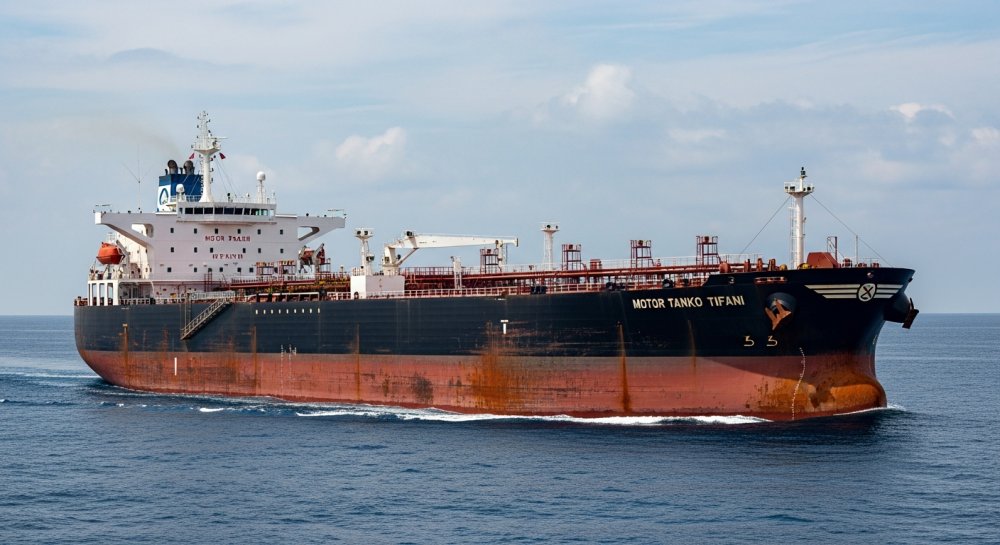
Admiral Samuel Paparo, commander, U.S. Indo-Pacific Command, is a Navy fighter pilot and TOPGUN grad, best known for an intense technology and warfighting focus. His forces hunted down and captured two Iranian oil tankers last week. Motor Tanker (MT) Tifani is a shadow fleet tanker notorious for hauling oil from Iran to a spot off the coast of Malaysia, then offloading it onto China-bound ships. U.S. forces boarded MT Tifani, took control of the bridge, and took custody of 1.9 million barrels of oil. Street value: $171 million, at $90 per barrel.
Next, the Motor Tanker Majestic X was boarded and seized in the Indian Ocean. Officially, it’s called maritime interdiction and right-of boarding, since MT Majestic X was a stateless vessel sanctioned back in 2024 for carrying Iranian oil.
Both Tifani and Majestic X are sailing west, in close proximity, on course for the U.S. Military Sealift Command base at Diego Garcia. The Motor Vessel Blue Star III was luckier; the crew promised the Marines she was not bound for Iran, and they let her go on their way. With eyes on, no doubt.
Historically, this year has seen the biggest haul of captured enemy vessels since President Franklin D. Roosevelt requisitioned 90 foreign merchant ships idling in American harbors in 1941. Don’t forget how U.S. Southern Command seized seven Venezuelan oil tankers in the Caribbean in January.
As for Russia, President Vladimir Putin’s shadow fleet may also be at risk in global seas. Vladimir Putin and his cronies acquired a large, unflagged, ghost fleet of tankers to evade sanctions after the 2022 invasion of Ukraine. The shadow fleet may top 770 vessels, moving 3.7 million barrels of oil per day. Mainly to China, of course.
By taking ships on the high seas, Operation Epic Fury is demonstrating that the Russian shadow fleet could be next.
Let us know what you think, please share your thoughts in the comments below.
