World News
Iran’s Deadly Drone Network Fuels Africa’s Forgotten War

Clear Facts
- Iran has supplied Sudan’s Armed Forces with Mohajer-6 attack drones since 2013, with at least seven cargo flights transporting drone parts between Iran and Sudan from December 2023 to July 2024
- An Iranian-born U.S. resident was arrested at LAX in April for allegedly brokering a $70 million deal to supply Iranian drone systems to Sudan’s Ministry of Defense
- The Sudanese civil war has killed as many as 400,000 people since April 2023, with over 11 million displaced in what the UN calls the worst displacement crisis in the world
- Recent drone strikes have destroyed UN aid trucks and killed seven civilians in residential areas, with hospitals and schools among the targets
The Islamic Republic of Iran stands accused of supplying deadly attack drones to Sudan’s military forces, enabling strikes that have indiscriminately killed women and children in Africa’s deadliest ongoing conflict. The same drone technology used by Hezbollah and the Houthis against Israel now terrorizes Sudanese civilians.
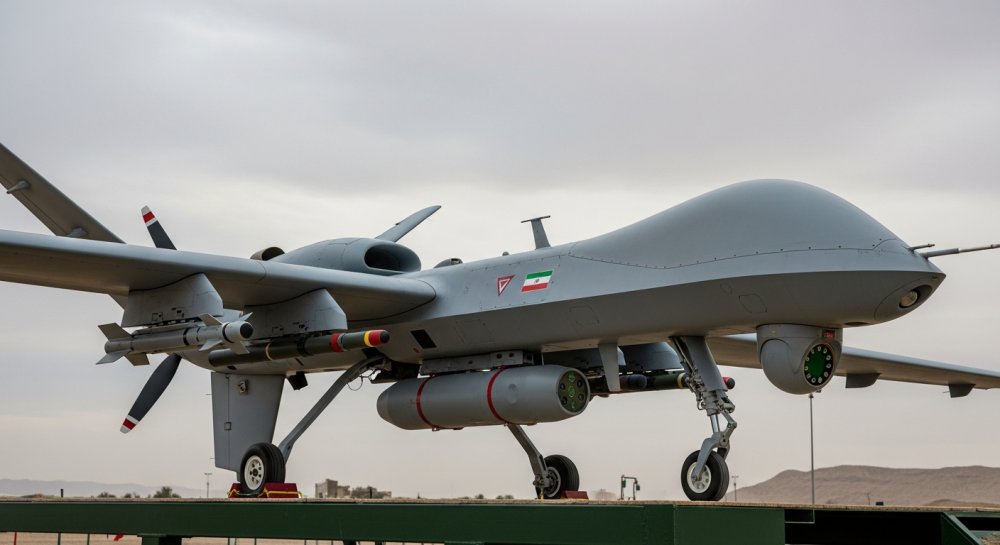
Mariam Wahba, research analyst at the Foundation for Defense of Democracies, confirmed to Fox News Digital that Iran has provided Sudan’s Armed Forces with drones, specifically the Mohajer-6, manufactured by Qods Aviation Industries—a U.S.-sanctioned entity—since 2013. These aren’t surveillance tools; they’re precision strike platforms designed to kill.
The civil war, now entering its fourth year, has produced staggering casualties. Since April 15, 2023, an estimated 400,000 people have died. More than 11 million have been forcibly displaced, creating the world’s worst humanitarian displacement crisis while the international community remains largely silent.
Evidence of Iran’s continued involvement keeps mounting. Wahba revealed that between December 2023 and July 2024, at least seven cargo flights traveled between Iran and Sudan, likely transporting drones and component parts. The pipeline remains active, with federal authorities disrupting one major transaction on American soil.
On April 19, federal agents arrested an Iranian-born U.S. resident at Los Angeles International Airport. Bill Essayli, First Assistant U.S. Attorney for the Central District of California, announced the arrest on X.
“Shamim Mafi, 44, of Woodland Hills, was arrested at Los Angeles International Airport for trafficking arms on behalf of the government of Iran. She is charged with a violation of 50 U.S.C. § 1705 for brokering the sale of drones, bombs, bomb fuses, and millions of rounds of ammunition manufactured by Iran and sold to Sudan.”
The announcement included photos of Iranian drones and what appeared to be a suitcase packed with cash—visual evidence of Iran’s global arms trafficking network. Ciaran McEvoy from the U.S. Attorney’s Office confirmed that Mafi remains in federal custody, with arraignment scheduled for May 8 in Los Angeles.
The $70 million deal Mafi allegedly brokered would have supplied Mohajer-6 systems and additional hardware directly to Sudan’s Ministry of Defense. That’s American sanctions being violated to fuel a war killing hundreds of thousands.
The State Department expressed serious concerns about drone warfare’s impact on civilians. A spokesperson told Fox News Digital that both the Sudanese Armed Forces and their opponents, the Rapid Support Forces, are deploying drones against civilian targets.
“Recently we have seen RSF and SAF drones destroy hospitals and schools, killing civilians.”
The Mohajer-6 represents Iran’s most versatile drone platform. Wahba described it as “Iran’s workhorse drone”—the same system Hezbollah and the Houthis use in attacks on Israel and Red Sea shipping. Unlike kamikaze drones, the Mohajer-6 is reusable, capable of surveillance and precision strikes, with the ability to loiter, collect intelligence, and return to base for repeated missions.
Iran’s involvement extends beyond hardware sales. The State Department identified deeper connections between the Iranian regime and Islamist groups fighting alongside Sudan’s Armed Forces.
“Islamist groups aligned with the SAF have formed relationships with the Iranian regime and have received assistance from Iran. We’ve sanctioned a number of these groups, including the Sudanese Muslim Brotherhood, who used unrestrained violence against civilians and undermined efforts to resolve the conflict in Sudan. Many of the group’s fighters have received training and other support from Iran’s Islamic Revolutionary Guard Corps (IRGC) and have committed atrocities against civilians.”
The human cost continues mounting. United Nations spokesperson Stéphane Dujarric condemned recent drone attacks that struck both humanitarian operations and residential areas. On April 24, a UN refugee agency aid truck carrying emergency shelter kits was destroyed by drone attack while transiting through Umm Drisaya in North Darfur state. All supplies were lost in the resulting fire.
The following day brought worse news. A drone strike hit residential neighborhoods in El Obeid city, North Kordofan state. Seven people died and over 20 were injured, according to local medical groups. These weren’t military targets—these were families in their homes.
“These are ordinary families in their homes, caught in violence that continues to reach civilian neighborhoods. We condemn all of these attacks.”
For Sudan’s children, the psychological toll compounds the physical danger. Ricardo Pires, communication manager for UNICEF, painted a grim picture of childhood under drone warfare.
“For children in Sudan, the sound of a drone is yet another dreadful signal to hide and hope they are not harmed next. Across Darfur and Kordofan, drones and other explosive weapons are turning streets, hospitals and schools into places of danger and death. This is not just a protection threat for children. It is childhood being attacked by new forms of warfare.”
The State Department emphasized that countering Iran’s regional destabilization efforts remains a U.S. priority, particularly regarding the protection of religious freedom in Sudan. American policy seeks to limit Islamist influence in Sudan’s government and curtail Iran’s activities that contribute to conflict and civilian suffering across the region.
While global attention focuses elsewhere, Iran’s drone technology—the same platforms threatening Israel and international shipping—kills African civilians daily. The arrests and sanctions represent important steps, but the cargo flights continue, the deals keep getting brokered, and the death toll rises in what remains one of the world’s most neglected humanitarian catastrophes.
Let us know what you think, please share your thoughts in the comments below.
