World News
Second-Largest Ruby Ever Found Emerges From War-Torn Nation Supplying 90% of World’s Stones

Clear Facts
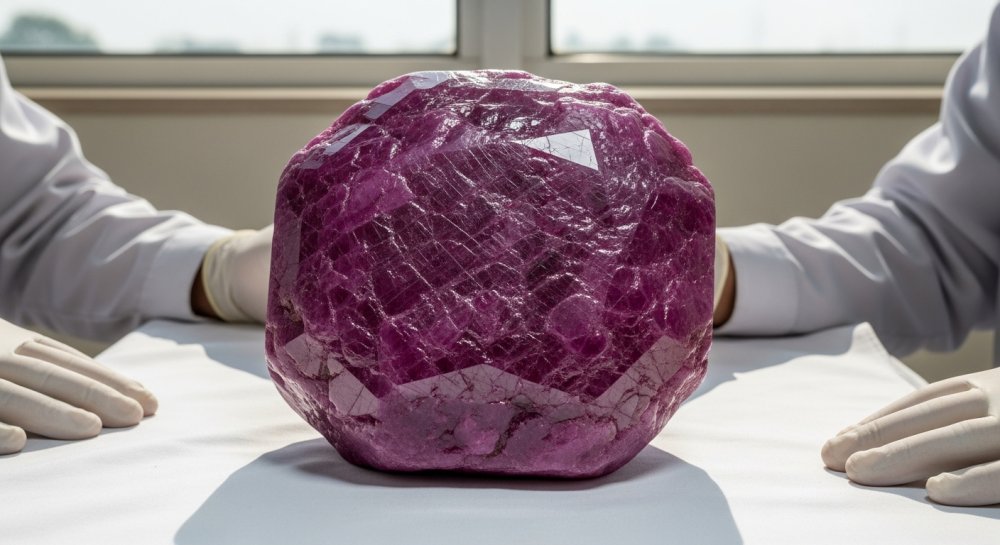
- An 11,000-carat ruby weighing 4.8 pounds was discovered near Mogok, Burma, in mid-April 2025
- The stone is the second-largest ruby ever found in Burma but may be more valuable than the largest due to superior quality
- Burma produces up to 90% of the world’s rubies, with the gem trade funding both military governments and ethnic armed groups in ongoing conflicts
A massive ruby discovered in Burma is being recognized as the second-largest ever unearthed in the conflict-ridden Southeast Asian nation. The gemstone weighs approximately 11,000 carats — about 4.8 pounds — and was found near Mogok in the Mandalay region, the epicenter of Burma’s gem industry and an area severely affected by ongoing military conflict.
The stone was discovered in mid-April, shortly after the country’s traditional New Year celebrations. Despite being roughly half the size of a 21,450-carat ruby discovered in 1996, experts believe this new find could command a higher value due to its superior quality.
The ruby displays a purplish-red color with slight yellow tones, moderate transparency, and a highly reflective surface — characteristics that distinguish it from its larger predecessor. Burmese President Min Aung Hlaing and his cabinet have already inspected the stone in the country’s capital of Naypyidaw.
Burma dominates global ruby production, supplying up to 90% of the world’s rubies, primarily from Mogok and nearby Mong Hsu. The gem trade — both legal and illegal — represents a major source of income in the economically struggling nation.
However, the industry remains deeply controversial. Rights groups, including Global Witness, have long urged jewelers to boycott Burmese gemstones, arguing that the trade helps fund the country’s military governments and contributes to human rights abuses.
Gem mining also finances ethnic armed groups fighting for autonomy, perpetuating Burma’s long-running internal conflicts. The mining regions remain dangerously unstable.
Mogok itself was seized in July 2024 by the Ta’ang National Liberation Army (TNLA), an ethnic armed group seeking independence. Control later returned to the military under a ceasefire deal brokered by China late last year, though the fragile peace remains uncertain.
The discovery highlights the complex intersection of natural wealth, political instability, and international commerce that continues to define Burma’s troubled gem industry.
Let us know what you think, please share your thoughts in the comments below.
